NAD+ decline is one of the most well-documented mechanisms in cellular biology, and its practical consequences show up in ways that are easy to dismiss as stress or poor sleep: slower recovery, mid-afternoon cognitive fatigue, and persistent low energy that sleep does not fully resolve. When you look at the biology, the answer keeps pointing back to one molecule.
NAD+ (nicotinamide adenine dinucleotide) is not some exotic biohacker compound. It is a coenzyme present in every single cell in your body, and its decline with age is one of the most well-documented mechanisms in cellular biology. The question isn't whether to support NAD+ levels. The question is which precursor to use: NMN (nicotinamide mononucleotide) or NR (nicotinamide riboside). That debate, despite years of research, is still not cleanly resolved.
This guide cuts through the marketing noise and gives you the actual science, the iVitaLab team's reasoning, and a clear framework for making the choice yourself.
Quick Answer: NMN vs NR in 2026
- Both work: NR and NMN raise NAD+ levels in human trials. Neither is definitively proven better.
- NR has more human data: The BASIS trial (2016) and multiple follow-ups give NR a longer evidence track record.
- NMN has momentum: Washington University human trials published 2021 onwards show real NAD+ elevation and muscle benefits.
- Our pick: NR, specifically Pure Encapsulations NR Longevity, for quality and cost reasons.
- Non-negotiable pairing: Always stack with TMG (trimethylglycine) to protect methylation.
What Is NAD+ and Why Does It Decline
NAD+ plays three roles that matter most for longevity. First, it is the primary fuel currency for the mitochondria: the molecule that accepts electrons during cellular respiration and drives ATP production. Without adequate NAD+, your cells literally produce less energy. Second, NAD+ activates the sirtuin proteins, particularly SIRT1 and SIRT3, which regulate gene expression, stress responses, and DNA repair. Third, it is consumed directly by PARP enzymes during DNA repair whenever your cells detect damage.
The decline is not subtle. Multiple studies, including a landmark 2013 paper in Cell by Guarente and colleagues, document roughly a 50% drop in NAD+ levels between your twenties and your fifties. That decline tracks closely with the mitochondrial dysfunction, accumulating DNA damage, reduced sirtuin activity, and chronic low-grade inflammation that characterize cellular aging.
Your body can synthesize NAD+ from tryptophan through the de novo pathway, but the efficiency of that pathway declines with age and cannot keep pace with increased demand from PARP enzymes responding to age-related DNA damage. The salvage pathway, which recycles nicotinamide, also becomes less efficient. That is the gap that NR and NMN are designed to fill: they are both direct precursors that enter the NAD+ synthesis pathway at a highly efficient point.
NMN vs NR: How They Differ
NMN and NR are structurally very close. NR is essentially NMN minus one phosphate group. That single difference has real implications for how each molecule enters your cells.
NR (nicotinamide riboside) is smaller and can be transported directly into cells via specific nucleoside transporters. Once inside, it gets phosphorylated to NMN, and then to NAD+. The pathway is well-characterized and the absorption is efficient.
NMN (nicotinamide mononucleotide) is larger. For years, the prevailing view was that NMN had to be converted to NR in the gut before absorption. A 2019 paper by Grozio et al. in Nature Metabolism changed that narrative by identifying the Slc12a8 transporter in the mouse gut that directly absorbs NMN intact. However, the human relevance of that finding is still debated. Washington University's 2021 Yoshino trial showed clear NAD+ elevation in skeletal muscle at 250mg NMN daily, which supports the idea that NMN is effectively absorbed in humans regardless of the exact transport mechanism.
For NR, the BASIS trial conducted by ChromaDex (the licensor of the Tru Niagen form of NR) in 2016 demonstrated dose-dependent NAD+ elevation in human blood. Multiple independent replications have followed. NR's human trial track record is simply longer at this point, not because NMN is inferior, but because NR got to clinical trials earlier.
The honest summary: both precursors raise NAD+ in humans. The molecular differences are real but may not translate into a meaningful clinical advantage for either at the doses most people take (250 to 500mg per day). Anyone claiming one is definitively superior right now is outrunning the evidence.
NMN vs NR: Side-by-Side Comparison
| Factor | NR (Nicotinamide Riboside) | NMN (Nicotinamide Mononucleotide) |
|---|---|---|
| Molecular Size | 255.25 Da (smaller) | 334.22 Da (larger) |
| Absorption Route | Nucleoside transporters; direct cellular uptake | Possible direct gut absorption (Slc12a8) + NR conversion |
| Human Trial Data | BASIS trial (2016); 10+ independent replications | Yoshino et al. (2021) Washington Univ.; 5+ trials |
| Typical Dose | 250 to 500mg/day | 250 to 500mg/day |
| Price Range | $45 to $70/month | $40 to $80/month |
Our Pick: Pure Encapsulations NR Longevity
After extensive research and testing through 2025, the iVitaLab team landed on NR and has stayed there. Here is the product we recommend and why the brand matters as much as the molecule.
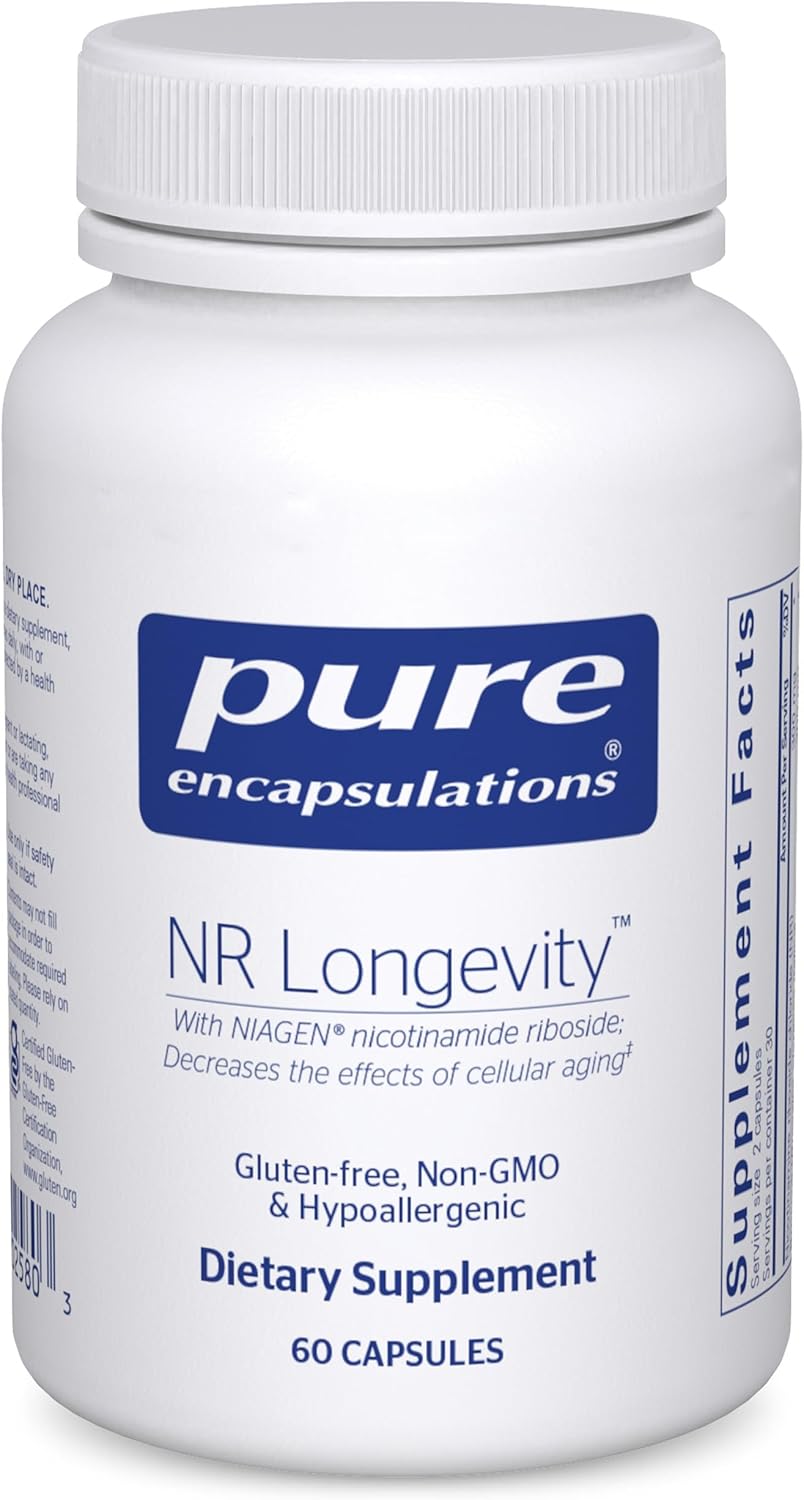
Pure Encapsulations NR Longevity NAD+
Nicotinamide Riboside · 60 capsules · Tru Niagen NR
Pros:
- Uses licensed Tru Niagen NR, the form used in clinical trials
- Pure Encapsulations third-party tests every batch for purity
- No fillers, flow agents, or allergens typical of cheaper brands
- Consistent potency batch to batch
Cons:
- $60 per 60 capsules is on the higher end
- Only 250mg per capsule; 500mg dose requires two capsules per day
~$60.00
Check Price on Amazon →Why the iVitaLab Team Recommends NR Over NMN
Three reasons drove our recommendation, and none of them are because NMN is bad.
First, the human evidence trail is longer for NR. The BASIS trial from 2016 is nearly a decade old now, and the replication record is solid. We are not against NMN at all, but when recommending something for daily use, we give weight to having more independent human trials behind the mechanism. Yoshino's 2021 Washington University NMN work is impressive, but it's one set of trials.
Second, brand quality matters more than molecule choice. Pure Encapsulations uses the licensed Tru Niagen form of NR, which is the same form tested in clinical research. They third-party test every batch and publish the certificates of analysis. With NMN, many available products use generic bulk NMN with no verification of purity or actual NMN content. Lab analyses have shown some budget NMN supplements contain less than 50% of the labeled dose. The quality gap between a verified NR product and an unverified NMN product is often larger than any theoretical absorption difference between the molecules.
Third, cost and stack efficiency. At around $60 per month, Pure Encapsulations NR leaves budget for the co-factors that matter, specifically Life Extension TMG, which the iVitaLab team considers genuinely non-negotiable. Spending an extra $20 per month on a premium NMN brand over a verified NR brand, while cutting the co-factors, is the wrong tradeoff.
If compelling head-to-head human trial data emerges showing NMN outperforms NR at equivalent doses, this recommendation will be updated. The science on this is still developing.
The TMG Rule: Don't Skip It
Both NR and NMN raise NAD+ by consuming methyl groups as a metabolic byproduct. Specifically, the conversion process generates nicotinamide, which is cleared by methylation. If you run an NAD+ precursor without replenishing methyl groups, you risk elevating homocysteine, a cardiovascular risk marker that also correlates with cognitive decline.
This is not a theoretical concern. A 2020 study by Trammell et al. specifically flagged methyl group depletion as a consideration for chronic NR supplementation. The fix is cheap and simple: Life Extension TMG (500mg) runs about $20 per month and donates the three methyl groups needed to close the gap.
Rule: If you are taking NR or NMN, you are taking TMG. Full stop.
Building the Full NAD+ Stack
NR by itself is the core, but the biology of NAD+ intersects with several other longevity pathways that respond to complementary support. Here is how the iVitaLab team approaches the full stack, from essential to optional.
Core (Non-Negotiable)
Pure Encapsulations NR Longevity at 250 to 500mg daily provides the NAD+ precursor backbone. We recommend 500mg in the morning, split across two capsules, with food.
Life Extension TMG at 500 to 1,000mg daily handles the methylation gap. Take it alongside the NR dose. At under $20 per month for a 200-capsule bottle, there is no good reason to skip this.
Optional: Senolytic Pairing
Pure Encapsulations Quercetin layers in nicely with the NAD+ stack. Quercetin is a senolytic: it helps clear senescent cells, the "zombie cells" that accumulate with age and secrete pro-inflammatory compounds. Since NAD+ supports SIRT1 and SIRT3 activity and senescent cells impair mitochondrial function, addressing both pathways simultaneously has additive logic. We recommend Quercetin three times per week rather than daily, following the intermittent senolytic protocol used in Mayo Clinic research.
Optional: Autophagy Synergy
Double Wood Spermidine is the newest addition to my stack. Spermidine is a polyamine found in wheat germ, soybeans, and aged cheese, and it is one of the most potent natural inducers of autophagy identified in research so far. Autophagy is the cellular self-cleaning process that removes damaged proteins and organelles, closely related to the mitophagy that NAD+ and sirtuin activity support. A 2021 observational study published in The American Journal of Clinical Nutrition associated higher dietary spermidine intake with reduced all-cause mortality. At 1mg daily, it is a modest cost for meaningful autophagy support alongside the core NAD+ protocol.
Full Stack Summary
| Supplement | Role | Daily Dose | Monthly Cost |
|---|---|---|---|
| NR (Pure Encapsulations) | NAD+ precursor, sirtuins, DNA repair | 500mg | ~$60 |
| Life Extension TMG | Methylation protection, homocysteine | 500-1000mg | ~$10 |
| Pure Enc. Quercetin | Senolytic, cellular cleanup | 500mg (3x/week) | ~$25 |
| Double Wood Spermidine | Autophagy induction | 1mg | ~$20 |
| Full NAD+ stack total | ~$115/month | ||
If budget is a constraint, start with just NR and TMG. That $70 to $80 per month core gives you the primary benefit. Add Quercetin next since it is inexpensive and the senolytic mechanism is well-supported. Spermidine is last to add, and skippable if you are price-sensitive.
Frequently Asked Questions
Is NMN or NR better for raising NAD+ levels?
The honest answer is that the debate is genuinely unresolved. Both NMN and NR raise NAD+ levels in human trials. NR has a longer record of human data going back to the 2016 BASIS trial. NMN has more recent Washington University data and may have advantages at higher doses. Neither has been proven definitively superior in a direct head-to-head trial.
What dose of NR or NMN should I take?
Most human trials have used 250mg to 500mg per day for both NR and NMN. We recommend 500mg NR daily. Some researchers have tested up to 1,000mg daily without serious adverse effects reported. Start at 250mg and assess tolerability before increasing. Higher doses consume more methyl groups, making adequate TMG supplementation increasingly important.
Do I really need TMG with NR or NMN?
Yes. Both NR and NMN consume methyl groups as a metabolic byproduct. Without replenishment via Life Extension TMG, homocysteine can accumulate, which is a cardiovascular risk factor. At under $20 per month, skipping it is a poor tradeoff.
Can I take NR and NMN together?
You can, but there is no strong evidence that combining them outperforms a higher single dose of one. The main effects are higher cost and a greater methyl group demand, meaning you would need more TMG. Most practitioners choose one precursor and optimize the dose rather than combining.
How long does it take to feel the effects of NR?
Based on trial data, measurable NAD+ elevation in blood occurs within 2 to 4 weeks. Subjective improvements in energy and recovery typically become noticeable around the 4 to 6 week mark. If you want to verify it is working, a whole-blood NAD+ test (available through life extension and functional medicine labs) can confirm whether levels are actually rising.
Related Guides
Best Vitamins for Longevity 2026: The Core Stack
The full longevity stack with the strongest evidence base, including where NAD+ fits in.
CoQ10 vs Ubiquinol: Which Form Is Worth the Price?
Another key mitochondrial support molecule: the absorption differences that actually matter.
Resveratrol: Does Sinclair's Longevity Pick Actually Work?
The research behind the most famous longevity supplement and why Pterostilbene is often the better choice.
How to Test Your Biological Age in 2026
The tests worth running to actually measure whether your stack is working: NAD+, methylation, and more.