I'd been taking supplements on and off for years the way most people do - grabbing whatever looked convincing at the pharmacy, forgetting to take them for three weeks, restarting, never tracking anything. The result was a genuine inability to tell if any of it was doing anything.
So I ran an experiment. I picked five supplements based on the evidence, not the marketing. I took them every single morning for 90 days without adding or removing anything. I tracked sleep with my Oura ring, noted energy and focus daily, and got bloodwork done at day 0 and day 90.
Here's exactly what I took, what it cost, and what actually moved.
The 5-Product Stack at a Glance
- Pure Encapsulations D3 + K2 - the foundation deficiency fix
- Pure Encapsulations Magnesium Citrate - sleep and cellular function
- Qunol Ubiquinol CoQ10 200mg - mitochondrial energy
- Pure Encapsulations B-Complex Plus - energy metabolism and methylation
- Carlson Cod Liver Oil - Omega-3, Vitamin A, and D3 from food
Total: approximately $85/month. No exotic compounds, no cutting-edge longevity stuff. Just the five things most adults need and most aren't getting.
Why These Five
I didn't start with a stack. I started with bloodwork. My Vitamin D was at 28 ng/mL - technically in the normal range, but at the low end where research shows cognitive and immune function both suffer. My B12 was borderline. I was waking at 3am about twice a week for no reason, which is a classic magnesium deficiency pattern. The other two, CoQ10 and Omega-3, were judgment calls based on age and the consistency of the evidence behind them.
I specifically avoided anything I couldn't explain the mechanism for. No adaptogens, no branded blends, nothing where the only evidence was the company's own website. These five all have decades of clinical literature behind them.
The Stack, Product by Product
1. Pure Encapsulations D3 + K2 (5000 IU D3 / 180mcg K2)
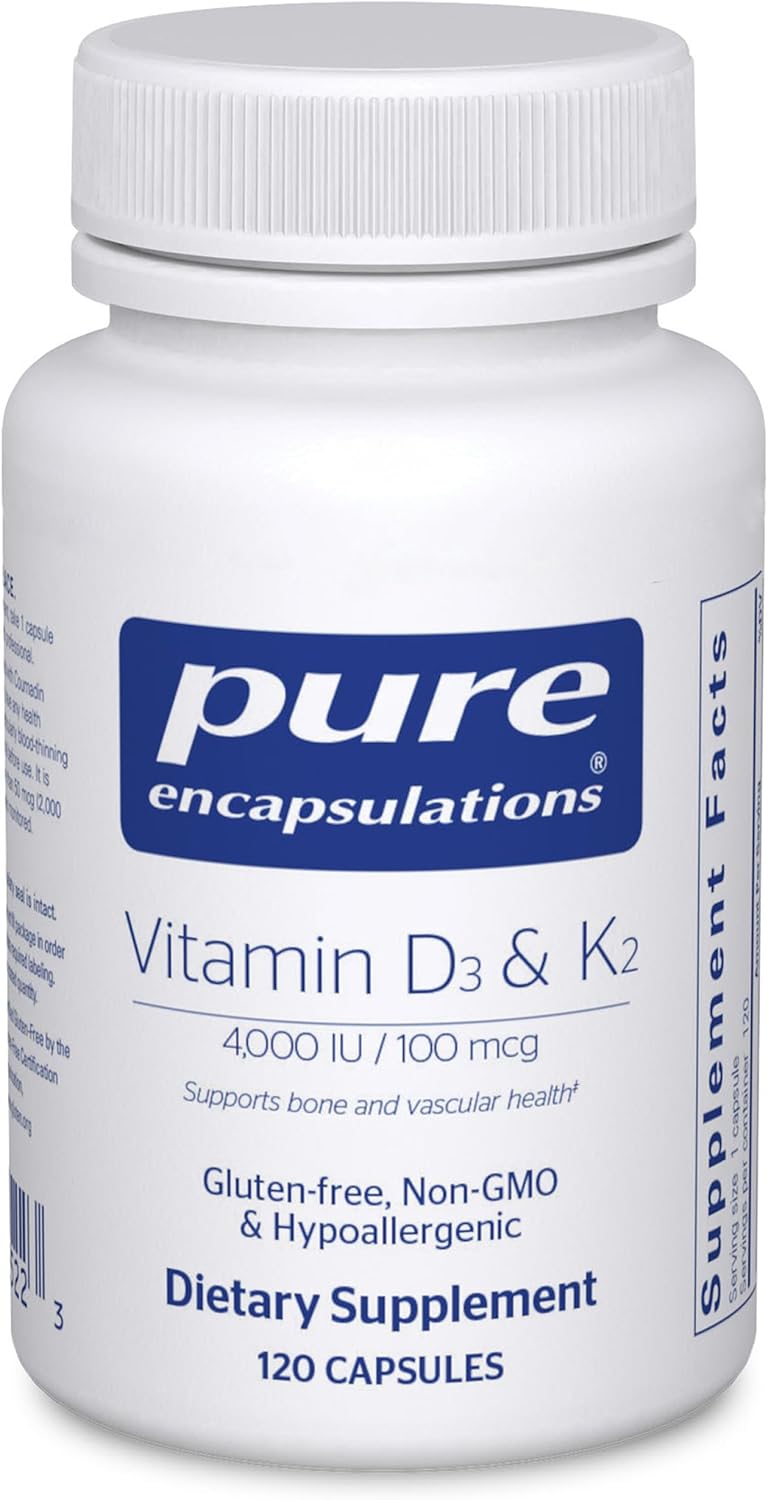
Pure Encapsulations D3 & K2
5,000 IU Vitamin D3 paired with 180mcg MK-7 K2. Hypoallergenic, no unnecessary additives. K2 directs the calcium that D3 mobilizes into bones rather than arteries - taking D3 alone without K2 is a widely acknowledged mistake at higher doses.
~$32 / 60 capsules
Check Price on AmazonThis was the single most noticeable change. By week three I noticed I was waking up in a better mood - not dramatically, but consistently. The kind of thing where you don't notice it's happening until you look back at your notes and realize you haven't described a morning as "rough" in two weeks. My 90-day bloodwork showed D3 at 61 ng/mL, up from 28. That's the range where the research says things actually change.
The K2 pairing matters. At 5,000 IU, D3 meaningfully increases calcium absorption, and K2-MK7 directs that calcium to bone rather than soft tissue. Taking high-dose D3 without K2 is one of the most common and under-discussed supplementation mistakes.
2. Pure Encapsulations Magnesium Citrate (150mg)
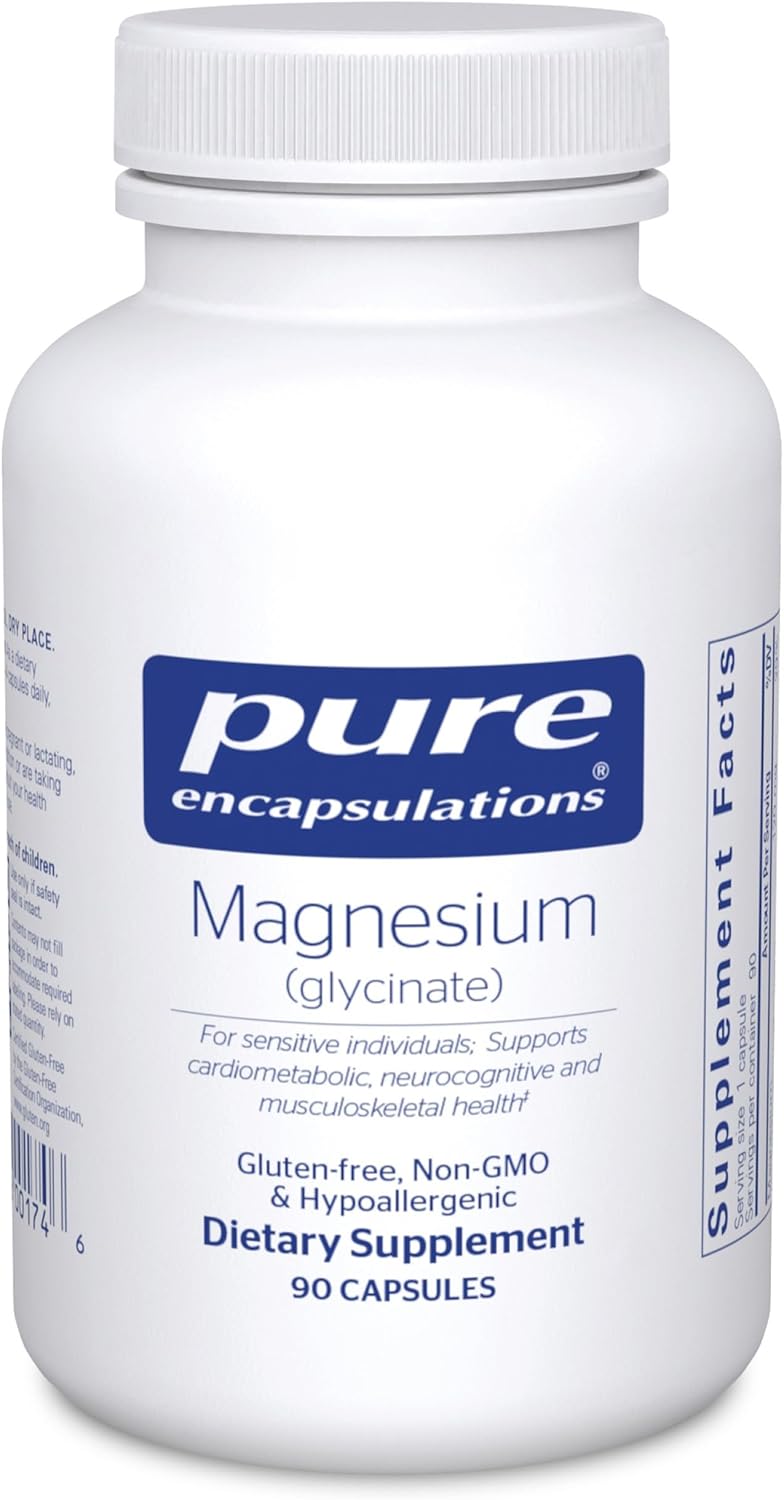
Pure Encapsulations Magnesium Citrate
Highly bioavailable citrate form. 150mg per capsule with no fillers. Taken in the evening, it supports GABA receptor activity, reduces cortisol, and helps regulate the nervous system's transition to sleep. One of the most reliably effective non-sedating sleep interventions.
~$26 / 180 capsules
Check Price on AmazonI took this one at night, not morning. Two capsules with dinner. The 3am waking problem resolved completely by week two and didn't come back across the full 90 days. My Oura ring showed sleep efficiency improving from 82% average to 89% average. That's a significant jump by any measure - the equivalent of getting an extra 50 minutes of quality sleep on the same total time in bed.
Magnesium deficiency is under-diagnosed because it doesn't show well on standard blood panels until it's severe. Roughly 50% of Americans don't meet the recommended daily intake from diet alone, and the citrate form is far better absorbed than the oxide form you'll find in most cheap supplements.
3. Qunol Ubiquinol CoQ10 200mg
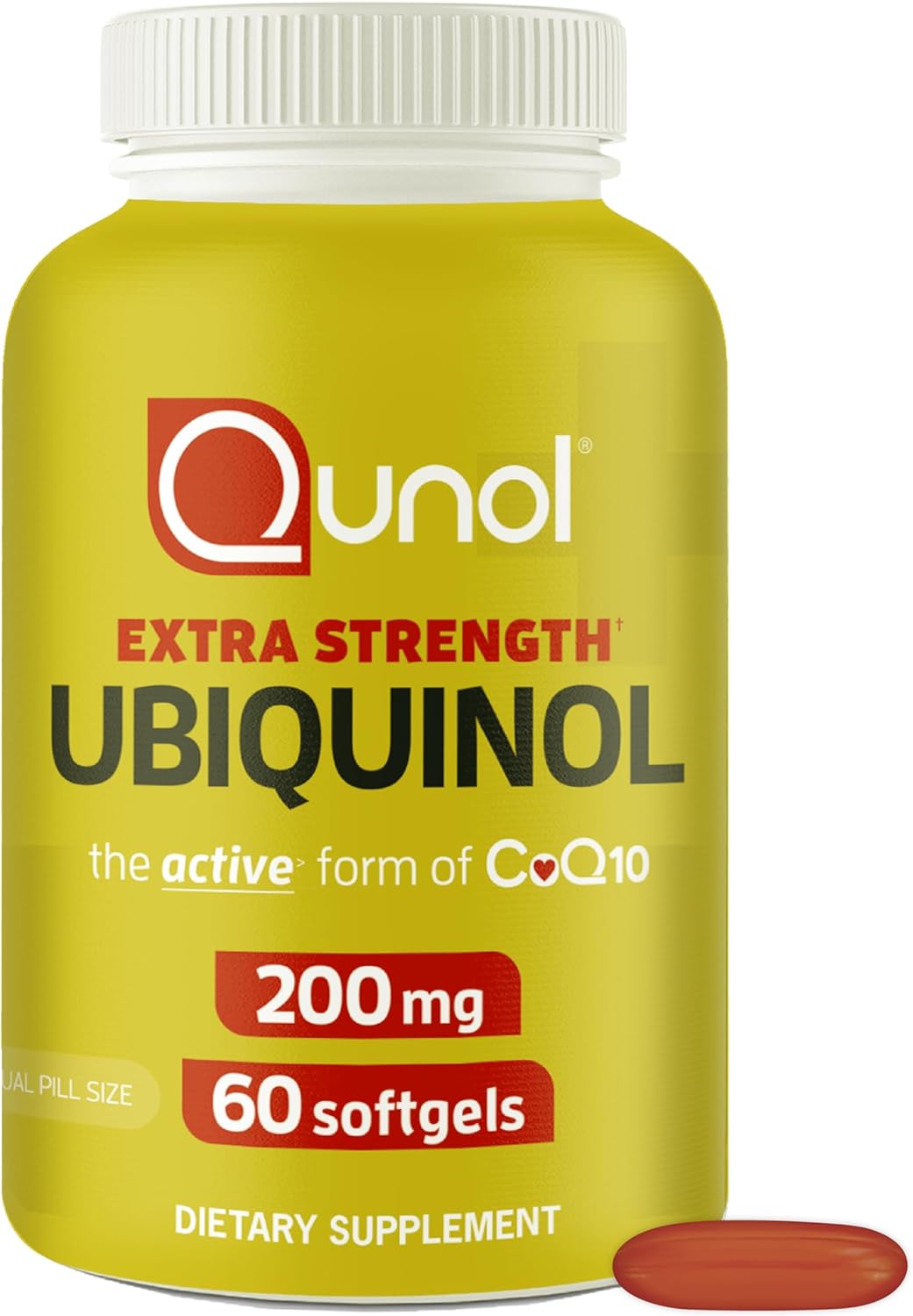
Qunol Ubiquinol CoQ10 200mg
Ubiquinol is the active, reduced form of CoQ10 that cells can use directly - versus standard CoQ10 (ubiquinone) which must first be converted. Qunol's water and fat-soluble formula has been shown to absorb up to 3x better than standard CoQ10 in comparative studies. Softgels, not tablets.
~$40 / 60 softgels
Check Price on AmazonThis was the hardest one to isolate because its effects overlap with everything else in the stack. What I can say is that at the 6-week mark, I noticed I was getting through afternoon work without the 3pm fog I'd accepted as normal. Whether that's CoQ10 specifically or the D3 or the sleep improvement from Magnesium, I honestly can't say with certainty.
What I can say with certainty: CoQ10 declines steadily from your 20s, and by your 40s the drop is biologically meaningful for mitochondrial energy production. The Ubiquinol form is not a marketing claim - the absorption difference versus standard CoQ10 is well-documented and worth the modest price premium. I take 200mg and wouldn't drop below 100mg.
4. Pure Encapsulations B-Complex Plus
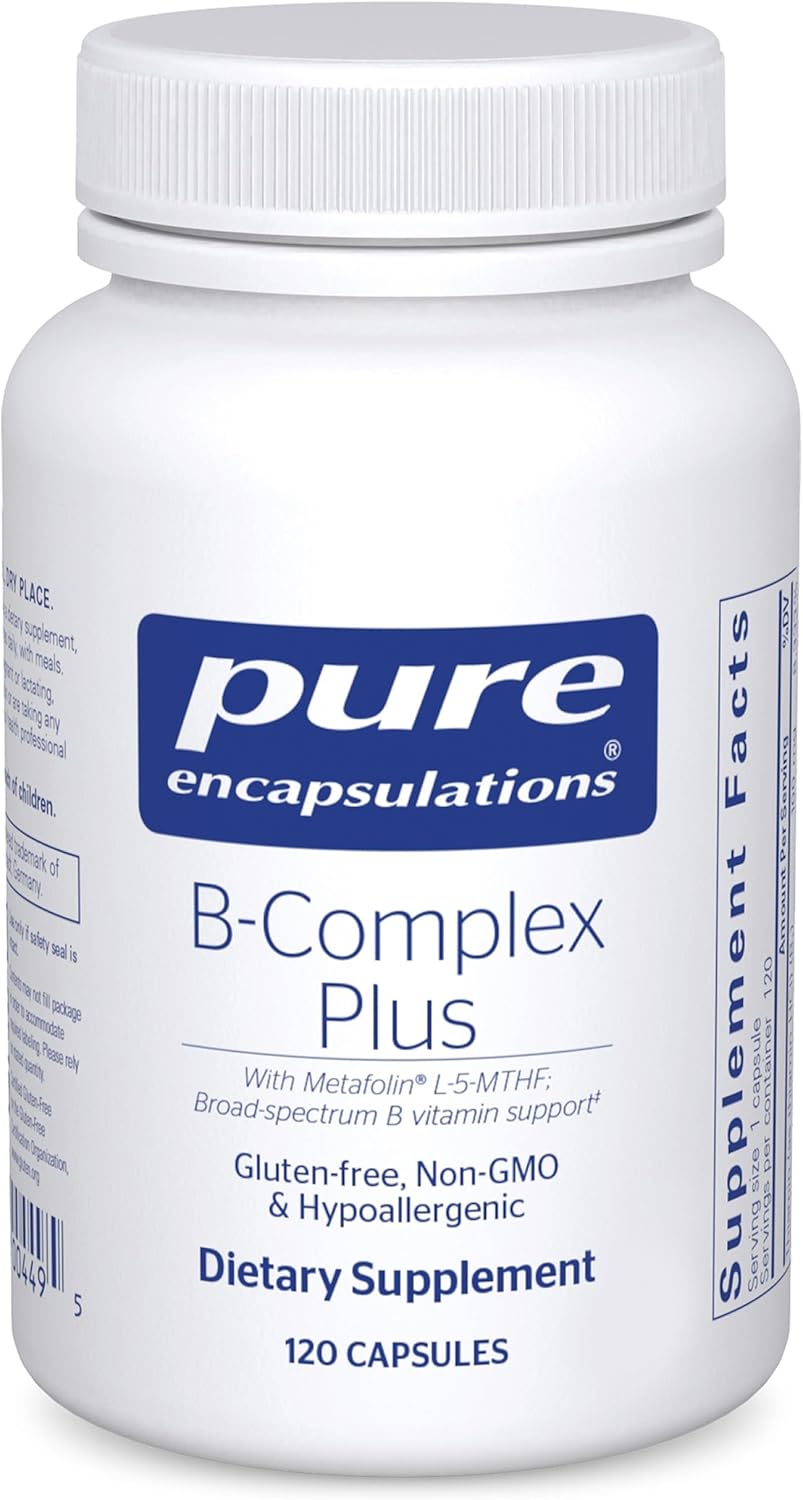
Pure Encapsulations B-Complex Plus
Complete B-vitamin complex with active forms: methylfolate instead of folic acid, methylcobalamin instead of cyanocobalamin. Critical for energy metabolism, neurotransmitter synthesis, and methylation. The active forms matter significantly for anyone with MTHFR variants - around 40% of the population.
~$29 / 60 capsules
Check Price on AmazonThis one I noticed least on a day-to-day basis, which is exactly what a foundational supplement should feel like. My B12 was borderline at day 0. At day 90 it was solidly in range. The energy impact of correcting a B-vitamin shortfall is gradual and cumulative rather than immediate and obvious - like a background process getting resolved rather than a switch flipping.
The form matters here more than almost any other supplement category. Folic acid, the synthetic form in most cheap multivitamins, is not bioequivalent to methylfolate for the 40% of people with MTHFR gene variants. If you're going to take a B-complex, pay the extra few dollars for one that uses active forms. Pure Encapsulations is the standard at this level.
5. Carlson Cod Liver Oil (1,100mg Omega-3)
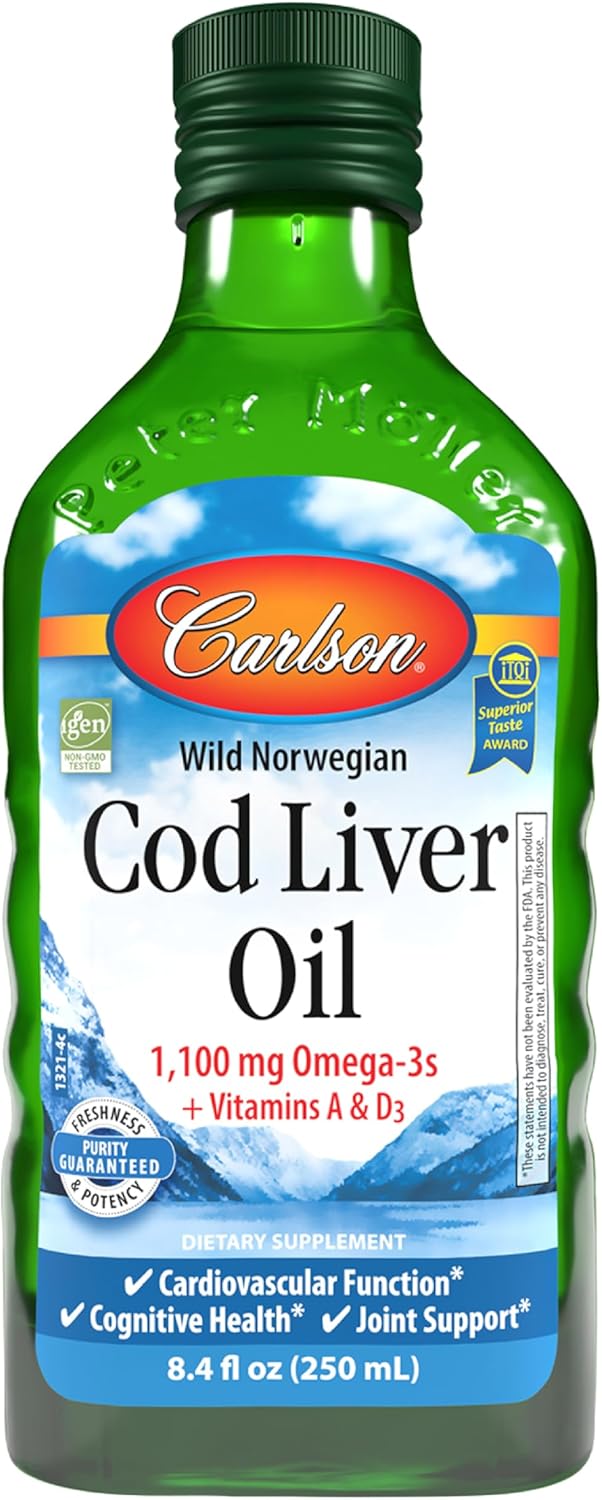
Carlson Cod Liver Oil - Norwegian Wild-Caught
Norwegian wild-caught, 1,100mg Omega-3 EPA+DHA per teaspoon plus natural Vitamins A and D3. Liquid form (lemon flavored) absorbs faster than softgels. Third-party tested for mercury and oxidation. One of the few fish oils that has passed independent purity testing consistently.
~$28 / 16.9 oz
Check Price on AmazonI debated between capsules and liquid for months. I switched to liquid for this experiment because absorption is faster and I can take it with breakfast without thinking about it. One teaspoon. The lemon flavor is genuine, not chemical. It doesn't taste like fish oil - it tastes like lemon.
The effects of Omega-3 are cumulative and widespread: cardiovascular, anti-inflammatory, joint, cognitive. You won't notice anything specific in a 90-day window because the benefits are long-game. But the evidence behind Omega-3 supplementation is among the deepest in nutritional science, and the gap between people who get sufficient EPA/DHA and those who don't is meaningful over a lifetime. I was getting almost none from diet alone. I now get 1,100mg daily.
The 90-Day Scorecard
What changed, tracked honestly:
The question I ask about any supplement is: would I keep taking it if no one was paying me to write about it? For all five of these, yes. The D3+K2 and Magnesium are things I'd never cut. The CoQ10 and Cod Liver Oil are long-game investments I believe in. The B-Complex is cheap insurance for something I was measurably low on.
What I'd Add If I Were Starting a Longer Experiment
The next layer I'm considering is NAD+ support - specifically the Pure Encapsulations NR Longevity, which has solid human trial data behind it. NAD+ declines roughly 50% between age 30 and 70, and that decline directly affects how well mitochondria function and how well cells repair DNA. I wanted a clean 90-day baseline before adding it. That's next.
For anyone interested in longevity science specifically, I'd also look at TMG alongside any NR supplementation - it supports the methylation process that NR relies on, and the two work better in combination. Life Extension's TMG 500mg is the version I'd start with.
Frequently Asked Questions
How long does it take to feel the effects of D3?
Most people notice improved mood and morning energy within 2 to 4 weeks of consistent D3, assuming they were deficient. Full serum normalization takes 8 to 12 weeks. The effects are most pronounced in people who were significantly deficient - roughly 42% of US adults qualify.
Can Magnesium Citrate help with sleep?
Yes. Magnesium regulates GABA receptors, which slow neural activity and promote relaxation. Most adults run deficient, and 200 to 400mg of the citrate or glycinate form in the evening consistently improves sleep onset and quality. It's one of the most reliably effective non-sedating sleep interventions available and backed by multiple randomized controlled trials.
Is CoQ10 worth taking if you're under 50?
CoQ10 peaks in your 20s and declines measurably through your 30s and 40s. If you're on a statin medication, supplementation is especially important because statins deplete natural CoQ10 production. At 200mg of Ubiquinol (the active form), the cost is modest for what you're getting.