We added magnesium to our stack almost as an afterthought - it seemed too basic to matter. Three weeks in, half the team reported meaningfully better sleep. That got our attention, and led us to a deeper look at why the form of magnesium you take changes everything.
Quick Answer: Which Form for Sleep?
- Glycinate: Best for sleep specifically. High absorption, no digestive side effects, Glycine adds calming properties. More expensive.
- Citrate: Excellent overall choice. Well-absorbed, good sleep benefits, lower cost, slight laxative effect at high doses.
- Oxide: Skip it. Only 4% absorbed. Works as a laxative, not a supplement.
- Malate: Good for energy and muscle recovery but less targeted for sleep.
- Threonate: Specifically crosses blood-brain barrier - better for cognitive focus than sleep per se.
Why Magnesium Works for Sleep
The mechanism isn't complicated once you know it. Magnesium binds to GABA receptors in the brain, which are the same receptors that benzodiazepines and alcohol target. The difference is that magnesium activates GABA gently and naturally, helping your nervous system shift from active mode into the quieter state needed for sleep onset.
It also suppresses the NMDA receptor, which is involved in excitatory neurological activity. Higher magnesium levels mean less hyperactivation of the nervous system at night - fewer racing thoughts, faster time to sleep, more time in restorative deep sleep stages.
The third mechanism is cortisol regulation. Magnesium helps dampen the HPA axis response that keeps cortisol elevated at night. If you're someone who feels wired and tired at the same time, this is often part of the picture.
The Forms Compared
| Form | Absorption | Sleep? | Verdict |
|---|---|---|---|
| Glycinate | Excellent | Best | Top choice for sleep focus |
| Citrate | Very good | Very good | Best value overall choice |
| Malate | Good | Okay | Better for energy/muscle |
| Threonate | Very good (brain) | Indirect | Cognitive focus, not sleep |
| Oxide | ~4% | Skip | Laxative, not a supplement |
Magnesium Citrate: The Reliable Workhorse
Citrate is the form we've used the longest and the one with the most human clinical data behind it for sleep. The citric acid it's bound to improves absorption significantly compared to oxide, and citric acid itself plays a role in the Krebs cycle, which is how your cells generate energy.
In multiple studies on sleep quality, magnesium citrate supplementation improved time to sleep onset, reduced nighttime awakenings, and improved subjective sleep quality scores in older adults (who tend to be more depleted). The subjects in many of these trials were sleeping significantly better within 8 weeks.
The one honest downside: at higher doses (above 400mg elemental magnesium), citrate has a laxative effect for some people. It's osmotic, meaning it draws water into the intestines. Most people tolerate 150-300mg of elemental magnesium from citrate without issue, especially with food. If you notice loose stools, split the dose or reduce it slightly.
Magnesium Glycinate: The Sleep-Specific Option
Glycinate is magnesium bound to glycine, an amino acid. It has two advantages for sleep: excellent absorption with very low digestive side effects, and the glycine itself has documented sleep-promoting properties independent of the magnesium.
A study in Frontiers in Neurology found that glycine supplementation alone improved subjective sleep quality, reduced daytime sleepiness, and improved memory recognition. Combined with magnesium's GABA and NMDA effects, you're getting a genuinely synergistic sleep compound. If sleep quality is your primary goal, glycinate is the better choice on a purely mechanism basis.
The trade-off is price. Magnesium glycinate is typically 30-50% more expensive than citrate per dose of elemental magnesium. For many people, citrate works just as well in practice. If you've tried citrate and still have digestive issues, or you want to specifically stack sleep-supportive compounds, glycinate is worth the extra cost.
Why I Recommend Citrate for Most People
The honest answer is value and evidence. Citrate has decades of clinical data, reliable absorption, and costs significantly less than glycinate. For someone starting magnesium supplementation for the first time, citrate is the right starting point. The glycine in glycinate is an advantage, but it's incremental over an already effective base form.
Pure Encapsulations Magnesium Citrate is the cleanest version we've found. 150mg elemental magnesium per capsule, no unnecessary additives, manufactured under pharmaceutical-grade conditions. At $27.00 for 180 capsules, you're looking at about six months at one capsule daily, or three months at two capsules.
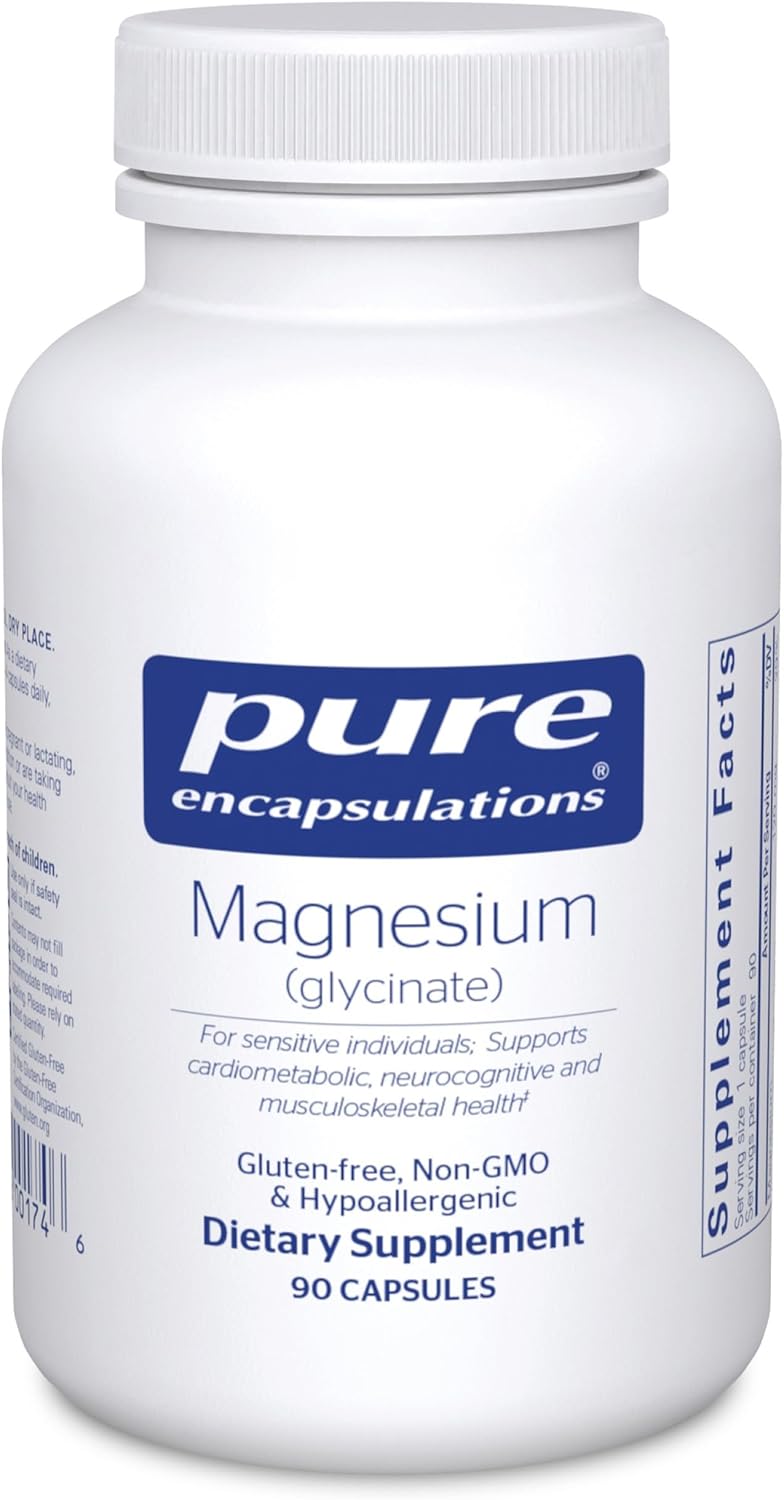
Pure Encapsulations Magnesium Citrate
150mg elemental magnesium per capsule · 180 capsules
$27.00
Check Price on Amazon →How to Take It
Timing matters for sleep. Take your magnesium 30-60 minutes before bed. This gives it time to raise plasma levels and activate the GABA/NMDA mechanisms before you're trying to sleep.
A small amount of food with your dose reduces the chance of any digestive sensitivity, particularly with citrate. Full meals delay absorption, so a light snack is better than taking it immediately after a heavy dinner.
Start with 150-200mg of elemental magnesium. After two to three weeks, assess sleep quality and adjust up to 300mg if needed. Most adults need somewhere in that 200-350mg supplemental range to close dietary gaps and notice a consistent effect.
Pair it with D3 + K2
Magnesium is a required cofactor for Vitamin D3 conversion. Without adequate magnesium, your body can't efficiently convert D3 into its active form, calcitriol. If you're supplementing D3, adding magnesium isn't just good for sleep - it makes your D3 work properly. See the D3 + K2 guide for the full picture.
Frequently Asked Questions
Which form of magnesium is best for sleep?
Glycinate is the top choice for sleep specifically because glycine itself has calming properties and absorption is excellent with no digestive side effects. Citrate is a strong second - well-absorbed, well-studied, and considerably cheaper. Oxide should be avoided for sleep.
When should we take magnesium for sleep?
Take magnesium 30 to 60 minutes before bed. It activates GABA receptors that quiet the nervous system and supports transition into deeper sleep stages. A small amount of food with the dose reduces the chance of digestive discomfort.
How much magnesium should we take for sleep?
Start at 200mg of elemental magnesium and adjust from there. The adult RDA is 310-420mg total daily including dietary intake. Most Americans get 150-250mg from food, so supplementing 150-200mg/day closes the common gap. Pure Encapsulations Magnesium Citrate provides 150mg elemental magnesium per capsule.