Most people taking Vitamin E are taking the wrong form. Tocopherols - the kind in almost every supplement - are well studied but increasingly questioned at high doses. Tocotrienols, the form found in palm and rice bran, show consistently stronger results in the cardiovascular and neuroprotective research. Our team switched after spending time with the comparative literature, and haven't looked back.
Quick Answer
- Tocotrienols move better in membranes: the unsaturated tail allows faster lateral diffusion through cell membranes
- Cholesterol reduction: gamma-tocotrienol inhibits HMG-CoA reductase, the same enzyme statins target
- Don't take with high-dose tocopherols: alpha-tocopherol competes with tocotrienols for uptake and reduces their effectiveness
- Neuroprotective: stronger evidence for brain protection than tocopherols in several animal and human studies
The Structural Difference That Drives Different Biology
Vitamin E is a family of fat-soluble antioxidants. Tocopherols have a saturated phytyl tail (no double bonds), while tocotrienols have an unsaturated tail with three double bonds (hence "trienol"). This structural difference sounds minor but has meaningful biological consequences. The unsaturated tail gives tocotrienols superior mobility within cell membranes: they can move laterally through the phospholipid bilayer roughly 40-60 times faster than tocopherols. This enhanced membrane mobility translates to faster antioxidant recycling and more efficient neutralization of lipid peroxidation radicals in membrane compartments.
Tocotrienols also interact differently with signaling proteins. They don't bind to the alpha-tocopherol transfer protein (TTP) in the liver, which means they're handled differently in the body. Alpha-tocopherol is actively retained and maintained in the body through TTP. Tocotrienols are distributed more widely to peripheral tissues and cleared differently. This distinct pharmacokinetics partly explains why their biological effects differ from tocopherols even though both are called vitamin E.
Cardiovascular Effects: Cholesterol and Arterial Health
Gamma-tocotrienol has a particularly interesting cardiovascular mechanism: it inhibits HMG-CoA reductase, the same enzyme targeted by statin drugs, through a post-transcriptional mechanism. Clinical studies in hypercholesterolemic subjects have shown that supplementation with tocotrienol-rich palm oil fractions (TRF) can reduce total cholesterol by 10-15% and LDL by 15-20%. These aren't massive numbers, but they're statistically significant effects through a natural compound.
A study by Tomeo et al. tested palm tocotrienol supplementation in patients with carotid artery atherosclerosis (plaque buildup). After 18 months, the tocotrienol group showed regression of plaque in 7 of 25 patients; none in the placebo group showed regression, and 10 showed progression. Plaque regression in a supplement trial is a striking finding, though the study was small. A larger trial (n=150) confirmed the plaque-stabilizing effect over 2 years.
Neuroprotection: Why Brain Researchers Are Interested
The brain is highly susceptible to oxidative stress given its high metabolic activity and lipid content. Tocotrienols accumulate in brain tissue at higher concentrations than tocopherols after supplementation. Multiple animal studies have shown that tocotrienol supplementation protects against neurological damage from stroke, glutamate toxicity, and oxidative stress at doses much lower than tocopherols needed to achieve comparable effects.
Human data is earlier stage but encouraging. A study of stroke patients found that tocotrienol-supplemented patients had smaller infarct volumes and better functional outcomes than controls. Gamma-tocotrienol has also shown promise in early oncology research for certain cancer types, though this is far from clinical application territory yet.
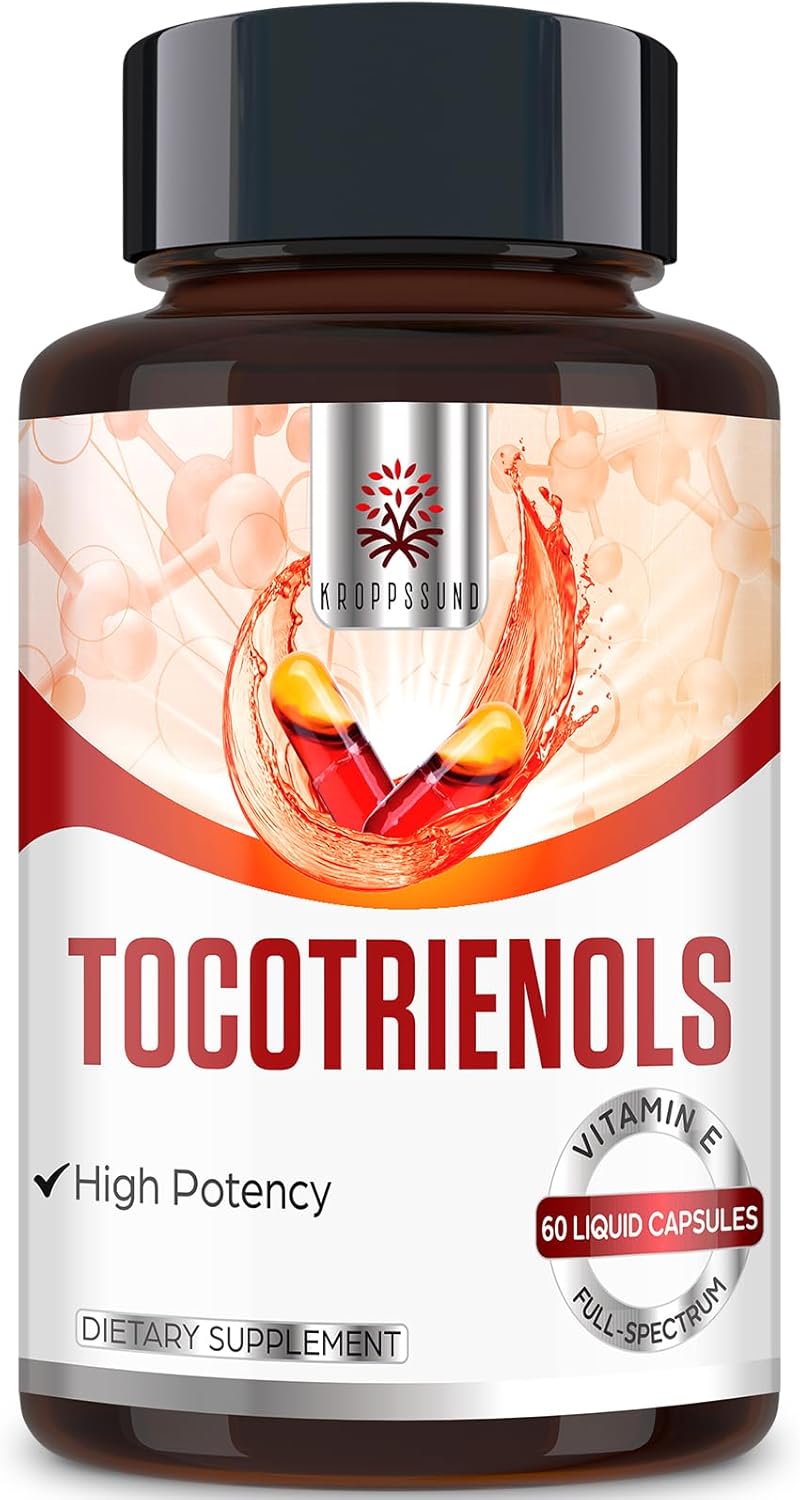
Kroppssund Tocotrienols 800mg Full Spectrum
Full spectrum alpha, beta, gamma, delta tocotrienols, 800mg per serving
$19.96
Check Price on Amazon →Full Spectrum Matters: Why You Want All Four Tocotrienols
The four tocotrienols (alpha, beta, gamma, delta) have overlapping but non-identical functions. Gamma-tocotrienol is the most studied for cholesterol reduction and anti-cancer effects. Delta-tocotrienol has strong anti-inflammatory properties. Alpha-tocotrienol shows the most potent neuroprotection in some models. Full-spectrum products provide all four simultaneously, which is preferable to isolated gamma or delta tocotrienol alone.
The critical caveat on the tocopherol competition: if you're taking a multivitamin or any supplement with high-dose alpha-tocopherol (above 200 IU or 134mg), it can reduce your circulating tocotrienol levels significantly. The mechanism is competitive: alpha-tocopherol binds to the same transfer proteins and absorbers, limiting tocotrienol uptake. If you want the full benefit of tocotrienol supplementation, check your other supplements for high tocopherol content and either reduce those doses or switch to a multivitamin with lower or no added vitamin E.
Frequently Asked Questions
What is the difference between tocotrienols and tocopherols?
Both are members of the vitamin E family, but tocotrienols have an unsaturated phytyl tail with three double bonds, while tocopherols have a saturated tail. This structural difference allows tocotrienols to move more fluidly through cell membranes and shows different pharmacological effects, particularly in cardiovascular and brain tissue.
Why do we need to avoid tocopherols when taking tocotrienols?
Alpha-tocopherol competes with tocotrienols for cellular uptake and can reduce circulating tocotrienol levels. Studies have shown that supplementing high-dose alpha-tocopherol alongside tocotrienols diminishes the tocotrienol benefits. If you're taking full-spectrum tocotrienols, avoid separate high-dose tocopherol supplements.
What conditions have the best evidence for tocotrienol benefit?
The strongest human evidence is for cholesterol reduction (gamma-tocotrienol inhibits HMG-CoA reductase), arterial health and atherosclerosis stabilization, liver health in NAFLD, and neuroprotection. Brain protection benefits appear superior to tocopherols in several studies.