Spermidine was one of the more surprising additions to our research list. The name doesn't help, but the mechanism is genuinely fascinating: it triggers autophagy - your cells' self-cleaning process - through a pathway distinct from fasting or rapamycin. When we saw it consistently appearing in the centenarian research, we took a closer look.
Quick Answer
- Autophagy activator: spermidine triggers the cellular cleanup process that declines with age
- Human trial data exists: the PRISM trial showed cognitive improvements in older adults with subjective memory complaints
- Found in common foods: wheat germ, aged cheese, mushrooms, and soybeans are rich dietary sources
- Long-term safety needs watching: the evidence is promising but the research timeline is shorter than established supplements
Autophagy: Why This Cellular Cleanup Process Is Central to Aging
Autophagy is the process by which cells break down and recycle their own damaged or dysfunctional components. Old mitochondria, misfolded proteins, and cellular debris get tagged, encapsulated in autophagosomes, and delivered to lysosomes for digestion and recycling. Without regular autophagy, these damaged components accumulate and impair cellular function. Reduced autophagy is a consistent feature of aging across species and is mechanistically linked to neurodegeneration, metabolic dysfunction, and immune senescence.
Autophagy can be stimulated by fasting (one of its primary benefits), caloric restriction, exercise, and certain compounds including spermidine and rapamycin. Spermidine triggers autophagy through epigenetic mechanisms: it inhibits histone acetyltransferases, which leads to hypoacetylation of histones and activation of autophagy-related genes. This is a more direct route to autophagy induction than dietary restriction and it works independently of caloric intake.
What the Human Trials Actually Show
The most significant human study on spermidine for cognition is the PRISM trial, a randomized double-blind controlled trial published in Alzheimer's and Dementia: Translational Research in 2021. The study enrolled 85 older adults with subjective cognitive decline and tested spermidine at 1.2mg daily for 3 months. Results: the spermidine group showed significantly better memory performance compared to placebo, with the strongest effects in participants who had the highest baseline cognitive complaints. This isn't a cure for dementia but it's a meaningful signal in a human population.
For cardiovascular health, a large observational study tracking over 3,000 participants found that higher dietary spermidine intake was associated with significantly lower all-cause mortality and reduced cardiovascular death specifically. A 2022 mouse study then showed the mechanism: spermidine restored mitophagy (mitochondrial autophagy) in cardiac cells of aged animals, reversing age-related heart enlargement and improving cardiac output. Human interventional data on cardiovascular endpoints is still in progress.
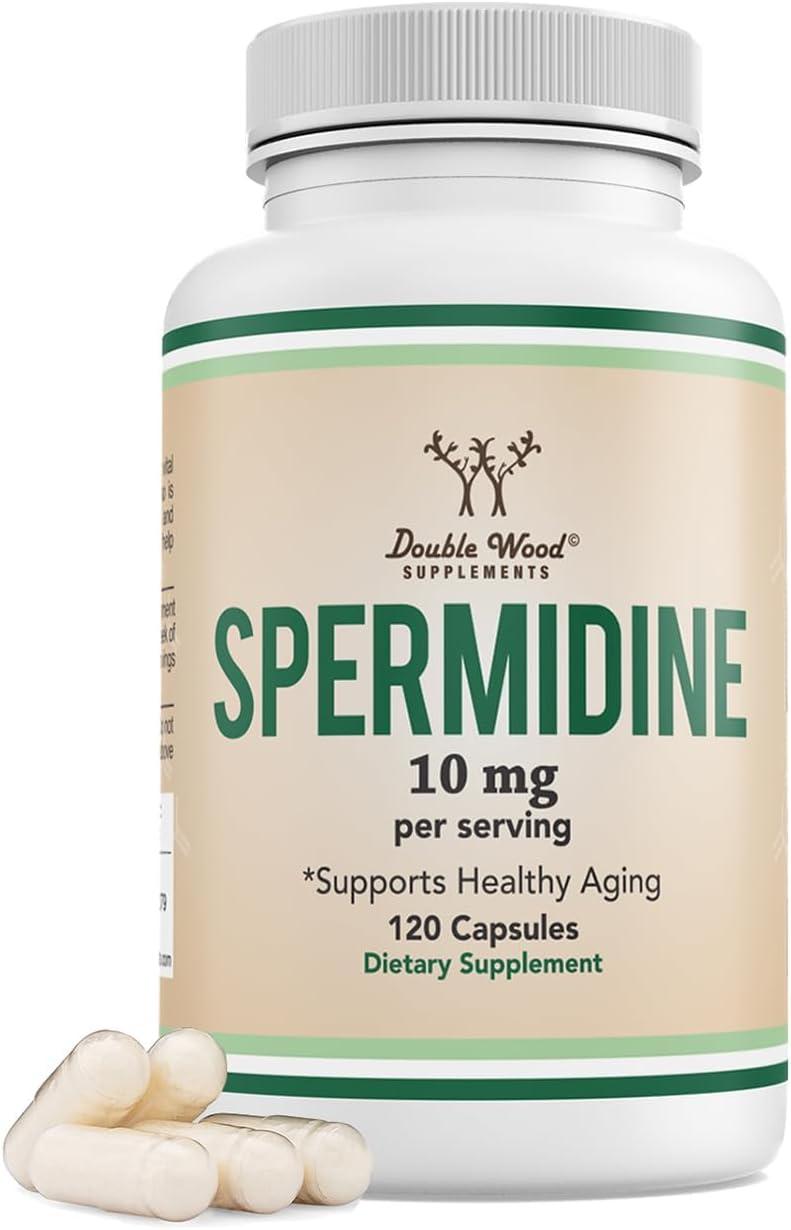
Double Wood Spermidine 10mg
10mg spermidine per capsule from wheat germ extract, 60 capsules
$39.95
Check Price on Amazon →Food vs Supplement: Can You Get Enough From Diet?
Wheat germ is the richest known dietary source of spermidine, containing roughly 3mg per 100g serving. A diet study in Austria comparing high and low spermidine intake groups estimated that the high-intake group consumed around 2-3mg of spermidine daily from food, which is in the range studied in the PRISM trial. Aged cheese, especially cheddar and gruyere, is another significant source at around 2mg per 100g. Soybeans, mushrooms, broccoli, cauliflower, and fermented soy products also contribute meaningfully.
In theory, dietary spermidine is sufficient for meaningful longevity effects if you're consistently eating a spermidine-rich diet. In practice, most people eat inconsistently enough that a supplement closes the gap more reliably. The 10mg dose in Double Wood's product substantially exceeds typical dietary intakes, though the optimal supplemental dose hasn't been definitively established in humans. Starting at 5-10mg daily is a reasonable approach based on available research.
Honest Caveats on Spermidine Research
Spermidine is one of the more exciting longevity compounds, but the honesty we owe here is that the human evidence is still younger than for many other supplements in this space. The PRISM trial is one study with 85 participants. The cardiovascular data is primarily observational, meaning we're correlating dietary spermidine intake with outcomes rather than directly testing supplementation. The animal data is compelling, but animals and humans don't always translate.
There's also a theoretical concern about polyamines and cancer. Rapidly dividing cells (including cancer cells) have elevated spermidine metabolism. High dietary or supplemental spermidine in someone with active or at-risk cancer is an area of genuine uncertainty. This isn't a reason to avoid spermidine for healthy adults, but it's a reason to be thoughtful about its use in cancer contexts and to monitor the ongoing research.
Frequently Asked Questions
What is spermidine and why does it matter for longevity?
Spermidine is a naturally occurring polyamine found in all living cells. It promotes autophagy, the cellular cleanup process where cells break down and recycle damaged proteins and organelles. Autophagy declines with age, and so does spermidine production. Supplementing spermidine appears to restore some autophagy activity, which is associated with healthier aging and longer lifespan across multiple animal models.
Can we get enough spermidine from food?
Certain foods are rich in spermidine: wheat germ (highest known concentration), aged cheese, soybeans, mushrooms, and broccoli. Diet studies suggest that high spermidine intake from food is associated with reduced cardiovascular mortality and cognitive decline in observational studies. However, getting therapeutic doses consistently from food requires specific dietary patterns that most people don't maintain.
Are there any concerns about taking spermidine long-term?
Long-term human safety data is still accumulating. The existing trials (up to 12 months) have found no significant adverse effects. Polyamines at very high doses have theoretical concerns related to cancer cell growth, but the doses in longevity research are far below those levels. This is an area where monitoring the ongoing research makes sense.