Most people who've read anything about longevity supplements know resveratrol. Fewer know that pterostilbene - its close structural cousin - may be significantly more effective for most purposes. At iVitaLab, this comparison is one we return to regularly because the bioavailability gap between the two changes the practical calculus considerably.
Quick Answer
- Pterostilbene absorbs better: approximately 80% oral bioavailability vs 20-40% for resveratrol
- Longer half-life: pterostilbene stays in circulation longer, meaning less frequent dosing needed
- Blood-brain barrier crosser: pterostilbene reaches the brain more effectively, relevant for cognitive effects
- Resveratrol still has value: especially in high-dose formulations or polyphenol complexes
The Structural Difference That Changes Everything
Resveratrol and pterostilbene are both stilbene compounds produced by plants as a stress response. The structural difference is small but chemically significant: resveratrol has three hydroxyl (OH) groups, while pterostilbene has two methoxy (OCH3) groups replacing two of those hydroxyls. This methylation makes pterostilbene substantially more lipophilic (fat-soluble), which changes how the body handles it.
Resveratrol's hydroxyl groups are quickly glucuronidated and sulfated in the intestinal wall and liver during first-pass metabolism. This means a large portion of standard resveratrol is converted to metabolite forms before it reaches systemic circulation, reducing its effective concentration. Pharmacokinetic studies have found resveratrol's oral bioavailability in the range of 20-40%, and its plasma half-life is short (around 1-2 hours), requiring multiple daily doses to maintain meaningful circulating levels.
Pterostilbene's methoxy groups are more resistant to this first-pass metabolism. Studies have found its oral bioavailability approaching 80%, and its half-life is longer (approximately 7 hours), meaning once-daily dosing maintains more stable plasma levels. It also crosses the blood-brain barrier more readily, which explains why animal studies on cognitive function show stronger pterostilbene effects than resveratrol effects at equivalent doses.
What the Human Trials Show
For resveratrol, the human trial data is mixed but not empty. A meta-analysis of 27 randomized controlled trials found that resveratrol significantly reduced systolic blood pressure, fasting glucose, and inflammatory markers. The positive trials tend to use higher doses (500mg-1000mg daily) and longer durations. The disappointing results often come from studies using subtherapeutic doses of poorly absorbed formulations. The lesson is that resveratrol works when you actually get it into your blood at meaningful concentrations.
Pterostilbene's human research is smaller in volume but consistently positive. A landmark 2017 clinical trial from the University of Mississippi randomized 80 adults to pterostilbene at 50mg or 100mg twice daily versus placebo. Results: pterostilbene significantly reduced LDL cholesterol and improved antioxidant markers. Notably, the 100mg twice daily group also saw reduced blood pressure and weight. Cardiovascular benefits were more consistent than comparable resveratrol trial results, likely because pterostilbene maintained higher circulating levels.
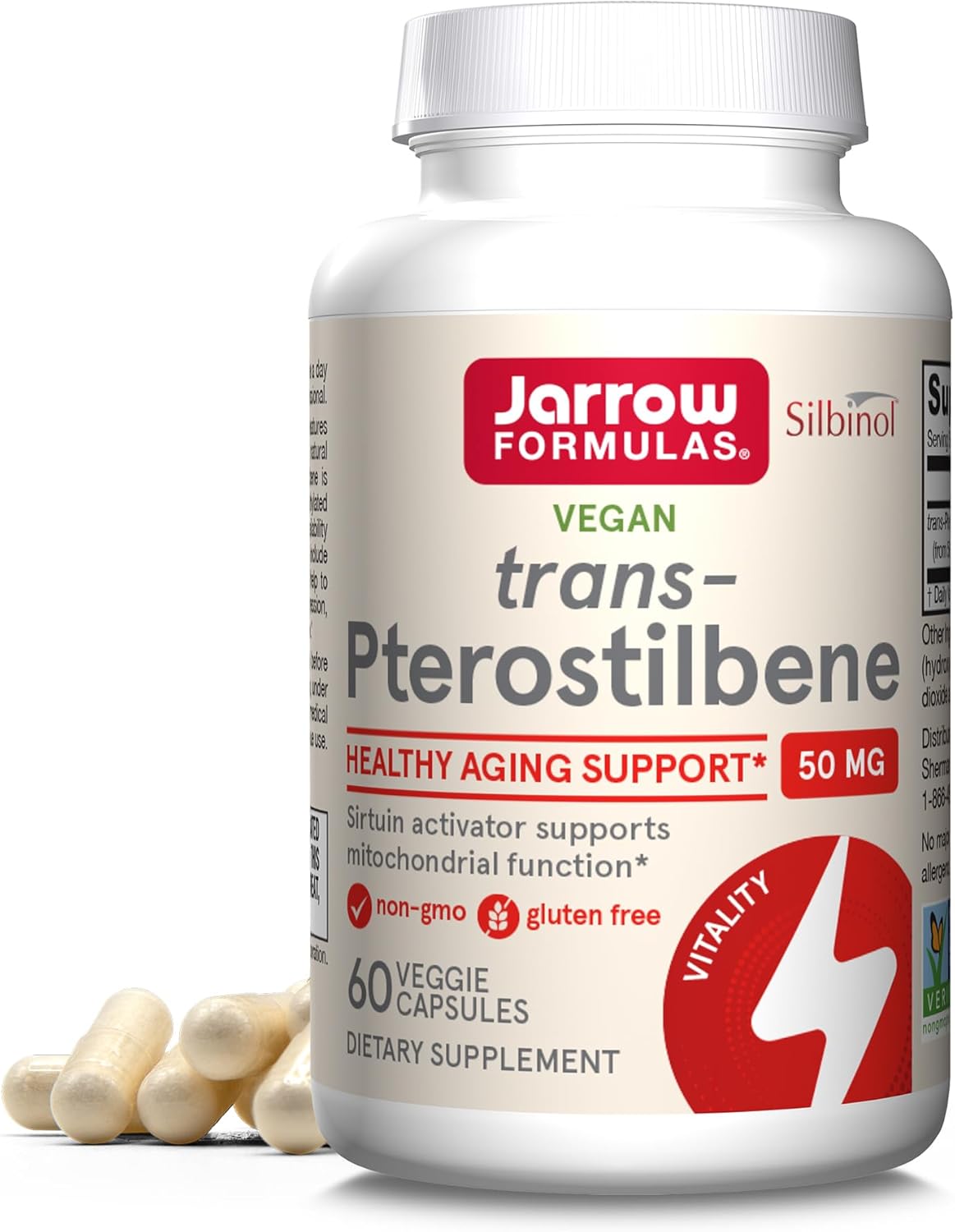
Jarrow Formulas trans-Pterostilbene 50mg
pTeroPure pterostilbene, 50mg per capsule, SIRT1 activator
$21.99
Check Price on Amazon →When Resveratrol Still Makes Sense
Despite pterostilbene's bioavailability advantages, resveratrol isn't obsolete. High-dose resveratrol (500mg+) or micronized/liposomal forms can achieve therapeutic plasma levels. Resveratrol also has a unique interaction with SIRT1 that isn't entirely replicable by pterostilbene at equivalent doses, particularly in the presence of NAD+. Sinclair's research specifically used resveratrol alongside NMN to activate SIRT1 pathways, and while the translation to supplements isn't straightforward, the synergy is biologically plausible.
Biodora's Resveratrol 1600mg Complex isn't just resveratrol; it's a polyphenol stack that includes multiple compounds working synergistically. The total polyphenol load at 1600mg represents a different value proposition than a simple resveratrol capsule. For someone who wants comprehensive polyphenol coverage rather than a targeted pterostilbene intervention, this kind of complex formula covers more ground.
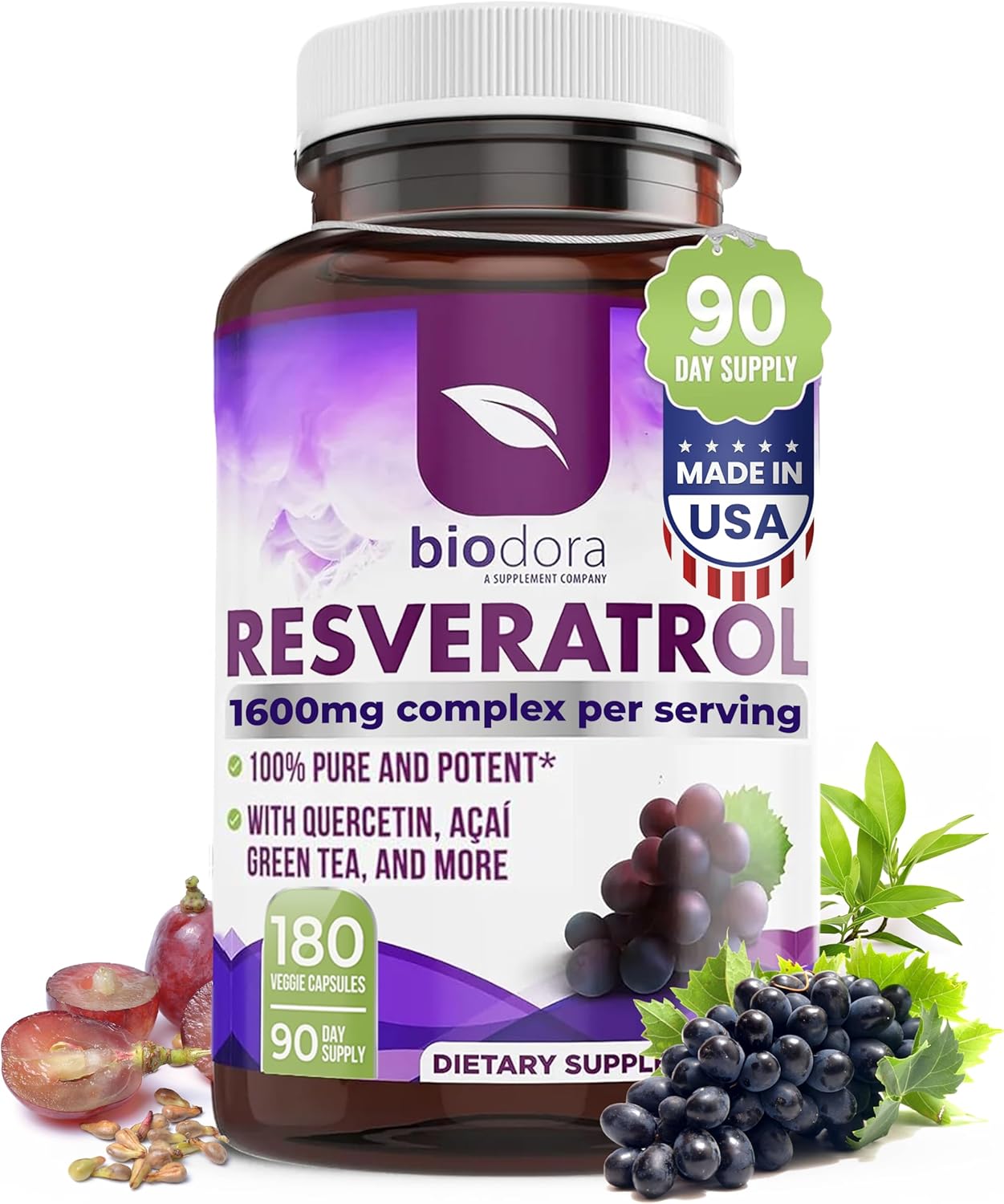
Biodora Resveratrol 1600mg Complex
High-dose resveratrol polyphenol complex, 1600mg per serving
$39.99
Check Price on Amazon →How to Choose and How to Stack
If we had to pick one: pterostilbene at 50-100mg daily. Better absorbed, longer half-life, stronger brain effects, and cheaper per effective dose. The Jarrow pTeroPure product at $21.99 delivers a well-characterized, clean form of pterostilbene that matches the doses used in research.
If budget allows, running pterostilbene as the backbone and adding a resveratrol complex for broad polyphenol coverage gives you complementary mechanisms. Take them both with a fat-containing meal. The synergy with quercetin (which operates through different but complementary pathways) rounds out the polyphenol stack well.
One honest note: both compounds are more impressive in cell and animal studies than they are in humans. The gap between in vitro activity and in vivo human effects is significant for all polyphenols due to metabolism, bioavailability, and dose-response issues. These are not miracle compounds. They're useful additions to a comprehensive approach to healthy aging, not substitutes for the basics.
Frequently Asked Questions
What is pterostilbene and how does it differ from resveratrol?
Pterostilbene is a naturally methylated analog of resveratrol found primarily in blueberries and grapes. The two methoxy groups on pterostilbene make it significantly more fat-soluble and resistant to rapid metabolism. Pterostilbene has approximately 80% oral bioavailability vs. around 20-40% for standard resveratrol, and a much longer half-life in circulation.
Does resveratrol actually work?
Resveratrol activates SIRT1 and AMPK in cell and animal studies and has genuine human trial data on blood pressure, glucose metabolism, and inflammation markers. Its limitation is bioavailability: standard resveratrol is heavily metabolized before it reaches systemic circulation. High-dose formulations or micronized forms improve this. The issue is that many products don't deliver therapeutically relevant circulating levels.
Can we take pterostilbene and resveratrol together?
Yes. They work through overlapping but distinct pathways and have a synergistic relationship. Combining a resveratrol complex with pterostilbene provides broader polyphenol coverage than either alone. Take both with a fat-containing meal for best absorption.