Phosphatidylserine is the brain supplement our team recommends most often to people who want something with genuine human evidence rather than plausible mechanism and mouse studies. The clinical data on cognitive function and cortisol regulation is real, consistent, and largely ignored because the compound isn't interesting enough to market aggressively. That's exactly why we pay attention to it.
Quick Answer
- Cell membrane integrity: PS is a key phospholipid in neuronal membranes; supplementing it maintains membrane fluidity and function
- FDA-qualified health claim: "Very limited and preliminary scientific research suggests that PS may reduce the risk of cognitive dysfunction in the elderly"
- Cortisol blunting: consistent reduction in cortisol response to exercise stress at 600-800mg daily
- Memory evidence: multiple RCTs showing improvement in age-related memory impairment at 300mg daily
What Phosphatidylserine Is and Why the Brain Needs It
Phosphatidylserine (PS) is a phospholipid, a type of fat molecule that forms a critical component of cell membranes. In the brain, PS is concentrated in the inner leaflet of neuronal cell membranes, where it plays structural and signaling roles. It's involved in maintaining membrane fluidity (which affects neurotransmitter receptor function and synaptic plasticity), regulating the activity of several membrane-bound enzymes, and facilitating cell-to-cell communication in neural tissue.
PS also plays a role in apoptosis regulation. When a cell is programmed to die, PS flips from the inner to the outer membrane leaflet, signaling to immune cells that the cell should be cleared. This process, called phosphatidylserine externalization, is involved in normal neural pruning and is disrupted in some neurodegenerative conditions. Brain PS concentration declines with age, which is one of the mechanistic justifications for supplementation.
The Memory and Cognitive Research
The most substantial human evidence comes from a series of trials in the 1990s and early 2000s, primarily using bovine-derived PS (which is no longer available due to BSE concerns). A major multicenter, double-blind, placebo-controlled trial published in Neurology tested 300mg of PS daily for 12 weeks in 149 patients with age-associated memory impairment. The PS group showed significant improvements in memory tasks, particularly in the subgroup with the most severe impairment at baseline.
A 2010 study specifically testing soy-derived PS (the form now in supplements) at 300mg daily for 12 weeks in older adults with subjective memory problems found significant improvements in delayed recall and word recognition. The FDA reviewed this literature and in 2003 issued a qualified health claim stating that while the evidence is limited and preliminary, PS may reduce the risk of cognitive dysfunction and dementia in the elderly. Qualified health claims are issued cautiously and require that the FDA find at least some credible scientific evidence supporting the claim.
The Cortisol and Stress Response Connection
Beyond cognitive aging, PS has a second well-documented use: attenuating the cortisol response to psychological and physical stress. A 1992 study published in Neuroendocrinology found that 800mg of PS daily significantly blunted the ACTH and cortisol response to a physical stress test in healthy men. Multiple subsequent studies in athletes have confirmed that high-dose PS (600-800mg) reduces the cortisol spike that follows intense exercise, potentially improving recovery and reducing the hormonal consequences of overtraining.
This effect makes PS particularly relevant for athletes who train heavily, people in high-stress professions, and anyone managing chronic stress with cortisol dysregulation. Elevated chronic cortisol is associated with hippocampal atrophy, memory impairment, and immune suppression, making the cortisol-modulating effect of PS doubly relevant for cognitive protection.
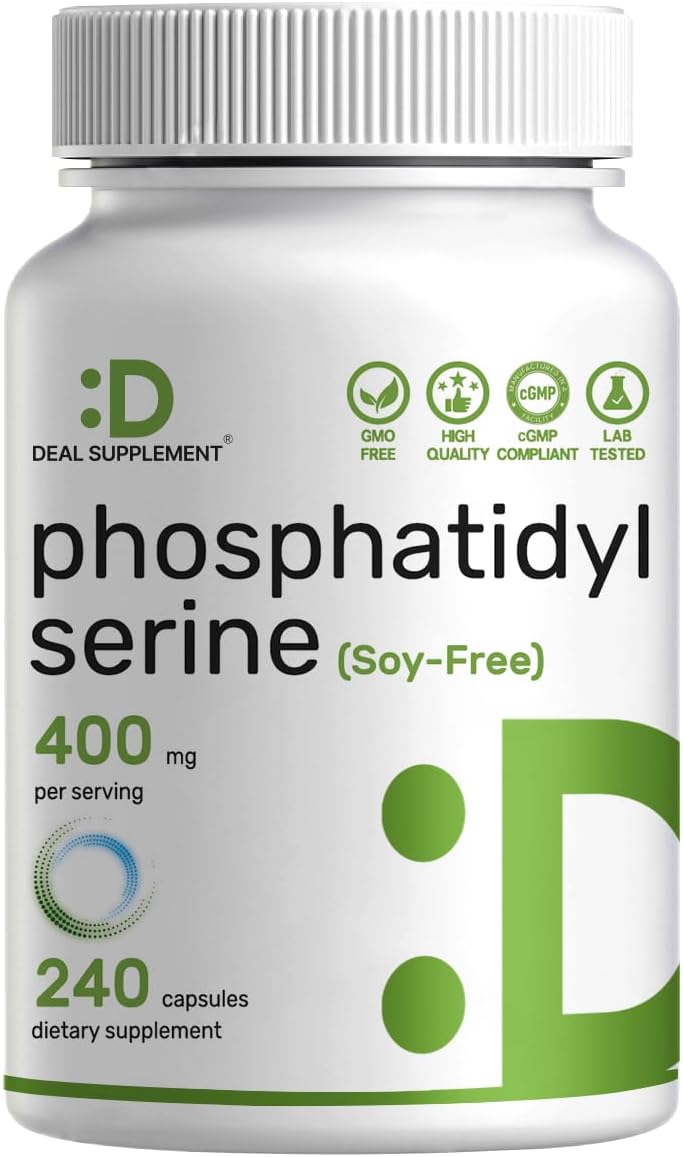
Deal Supplement Phosphatidylserine 400mg
400mg phosphatidylserine from soy lecithin, 120 capsules
$24.95
Check Price on Amazon →Who Gets the Most Benefit
The strongest evidence is for older adults with existing age-related memory concerns. If you're 60+ and noticing names and recent events slipping, PS at 300mg daily is one of the better-studied interventions available. The effect isn't dramatic, it's not a reversal of significant decline, but it's measurable improvement in memory tasks and it builds over weeks to months of use.
For athletes managing high training loads, PS at 400-800mg daily may meaningfully reduce the cortisol burden of heavy exercise. The cost-per-day at 400mg from the Deal Supplement product is about $6 per month, which makes it one of the more accessible brain-and-performance supplements when you account for the dual use.
For healthy younger adults without specific stress loads or memory concerns, the evidence for PS is thinner. It's a structural brain nutrient that declines with age, and maintaining brain membrane integrity is a legitimate long-term goal, but expecting acute cognitive enhancement effects at 30 without existing impairment isn't well-supported by the trials.
Frequently Asked Questions
Does phosphatidylserine actually improve memory?
For older adults with age-associated memory impairment, multiple randomized controlled trials have shown that PS supplementation at 300mg daily improves memory performance, learning, and cognitive speed. The FDA has issued a qualified health claim for PS and cognitive function in the elderly. Effects are more modest in healthy younger adults.
What does phosphatidylserine do for cortisol?
PS supplementation consistently blunts the cortisol response to exercise-induced stress. A study found that 800mg of PS daily for 10 days significantly reduced the cortisol spike following intense exercise. This makes it relevant for athletes with high training loads and for people with chronically elevated cortisol from stress.
What is the effective dose of phosphatidylserine?
The research dose is 300-800mg daily. For cognitive support, 300mg daily has been used in successful trials. For cortisol blunting in athletes, 600-800mg has been used. The Deal Supplement product at 400mg daily provides a dose within the studied range for both applications.