Ginkgo is one of the most studied supplements in existence, which makes it surprisingly hard to get a straight answer on. Our team spent time going back to the primary research - not the supplement company summaries - and found a more nuanced picture than either the enthusiasts or the skeptics tend to admit. Here's what the evidence actually shows in 2026.
Quick Answer
- Works best for older adults: most consistent evidence is in people over 50 with mild cognitive decline, not healthy young adults
- Mechanism is blood flow and neuroprotection: improves cerebral circulation and has antioxidant effects in neural tissue
- Standardization matters enormously: use products standardized to 24% flavonglycosides and 6% terpene lactones
- Requires consistent long-term use: 12-24 weeks minimum before meaningful assessment
What Ginkgo Actually Does in the Brain
The active compounds in ginkgo extract are primarily flavonoids (quercetin, kaempferol, isorhamnetin) and terpene lactones (ginkgolides A, B, C, and bilobalide). These work through several documented mechanisms. First, ginkgo inhibits platelet-activating factor (PAF) and reduces blood viscosity, improving cerebral blood flow. Second, the ginkgolides have antioxidant activity specifically in neurological tissue. Third, ginkgo appears to modulate neurotransmitter systems, including acetylcholine activity, which is directly relevant to memory formation.
The cerebral blood flow effect is the most consistently demonstrated in imaging studies. Multiple fMRI and PET studies have shown that ginkgo increases regional cerebral blood flow in areas associated with memory and executive function. This is a measurable, reproducible physical effect, not a subjective report. Whether increased blood flow translates to meaningful cognitive improvements in healthy adults is where the research gets contested.
What the Clinical Trials Actually Show
The two types of studies tell different stories. In healthy young adults (under 40), the majority of well-designed trials find no significant cognitive improvement from ginkgo supplementation. The GEM Study (Ginkgo Evaluation of Memory), one of the largest ever conducted, enrolled over 3,000 adults aged 75+ and found that ginkgo did not significantly reduce dementia incidence versus placebo over 6+ years. That study specifically tested prevention in elderly adults and was largely negative.
But a different picture emerges in trials targeting people with existing mild cognitive impairment or early dementia. A comprehensive 2014 meta-analysis examining 21 trials found that ginkgo at 240mg daily for at least 24 weeks produced significant improvements in cognitive testing, Activities of Daily Living scores, and clinician-assessed global improvement in patients with dementia or mild cognitive impairment. The benefits were most pronounced in the subset with cerebrovascular risk factors, exactly what you'd predict from a compound that primarily works through improving brain circulation.
Several smaller trials in healthy older adults (55-70) have found improvements in processing speed and working memory. The consistency is better in this group than in the young healthy population. The honest conclusion: ginkgo biloba benefits are real but age- and population-specific. Don't expect dramatic effects at 35. At 60 with early cognitive concerns, the probability of meaningful benefit is higher.
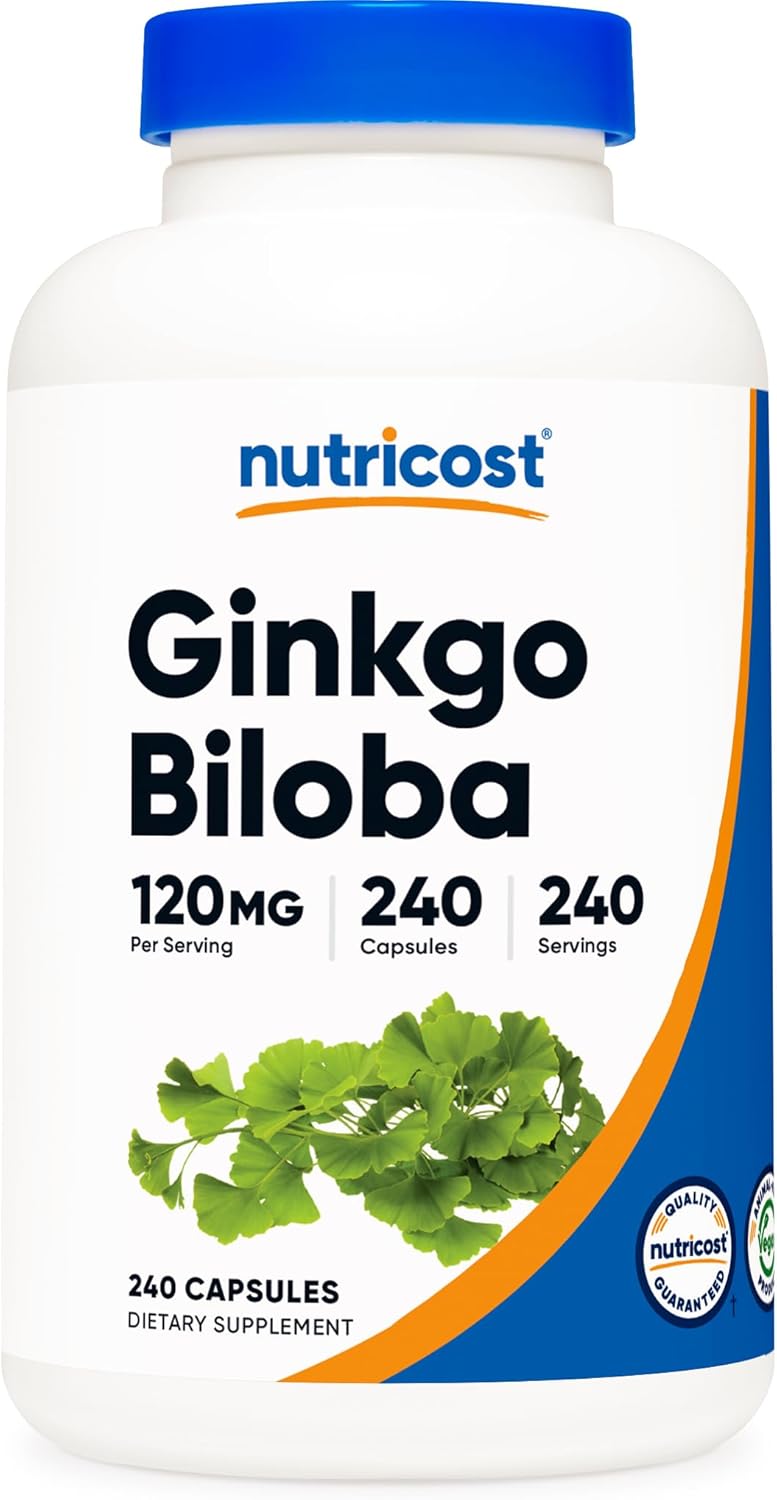
Nutricost Ginkgo Biloba 120mg
120mg standardized extract per capsule, 24% flavonglycosides, third-party tested
$19.99
Check Price on Amazon →Why Standardization Is Non-Negotiable
The studies that show ginkgo working consistently used standardized extracts designated EGb 761 or similar, standardized to specific percentages of the active fractions. The research dose is 120-240mg of a standardized extract daily. Non-standardized ginkgo powder or low-quality extracts can vary enormously in actual active compound content from batch to batch, which explains why people "try ginkgo" with a $7 bottle of unknown concentration and conclude it doesn't work.
Nutricost's 120mg product meets the standard dose from the positive trials and is third-party tested for potency and contaminants. Two capsules daily (240mg) matches the doses used in the most positive clinical outcomes research. At $19.99, it's accessible. Don't compare this to cheap non-standardized products on cost alone.
What I Use It For and When we'd Recommend It
Our personal use case is as a long-term brain circulation support supplement, not as an acute cognitive enhancer. The blood flow effects are most compelling as a preventive measure, and at $19.99 per month for 120mg twice daily, the cost-to-potential-benefit ratio is solid for anyone in their 50s or older who is attentive to cognitive aging.
For anyone under 45 looking for cognitive enhancement, the evidence doesn't strongly support ginkgo. You'd get more reliable cognitive benefit from optimizing sleep, fixing vitamin D deficiency, addressing omega-3 status, and managing blood sugar. Those interventions have more consistent effects in healthy adults than ginkgo does. After those foundations are in place, ginkgo becomes a reasonable add-on for the specific population where it shows the clearest research benefit.
Frequently Asked Questions
Does ginkgo biloba actually improve memory?
The evidence is genuinely mixed. For healthy young adults, most high-quality trials show no significant memory benefit. For older adults with mild cognitive impairment or early dementia, evidence is more positive, with several trials showing modest improvements in memory tasks and cognitive speed. It is not a memory pill for the general healthy population.
What is the standard dose of ginkgo biloba for cognitive effects?
Research has consistently used standardized extracts at 120-240mg daily, usually split into two doses. Look for products standardized to 24% ginkgo flavonglycosides and 6% terpene lactones. Non-standardized ginkgo products are unreliable.
Can ginkgo biloba interact with medications?
Yes. Ginkgo biloba has mild blood-thinning properties and can interact with anticoagulants and increase bleeding risk. It may also affect the metabolism of certain medications. Tell your doctor if you're on any medications before starting ginkgo.