Nattokinase came onto our radar through the cardiovascular research literature - specifically the work on fibrin degradation and blood viscosity. At iVitaLab, anything that shows consistent results in human clinical trials for blood pressure gets serious attention. What we found was an enzyme with a surprisingly strong evidence base and almost no mainstream recognition.
Quick Answer
- Proven blood pressure reduction: a 2008 RCT showed 5.5 mmHg systolic reduction at 2,000 FU daily
- Fibrinolytic activity: breaks down fibrin in blood clots, improving blood fluidity and circulation
- ACE inhibitor-like effect: inhibits the enzyme that raises blood pressure, similar mechanism to prescription ACE inhibitors
- Avoid with blood thinners: real interaction risk with anticoagulants; discuss with your physician first
What Nattokinase Actually Is
Nattokinase is a serine protease enzyme produced during the fermentation of soybeans with Bacillus subtilis natto. It was discovered in 1987 by researcher Hiroyuki Sumi, who identified its fibrinolytic (clot-dissolving) properties while researching compounds that could mimic the action of plasmin, the body's natural clot-dissolving enzyme. Natto, the food from which it comes, has been consumed in Japan for over 1,000 years, and Japanese populations with high natto consumption have historically lower rates of cardiovascular disease, though diet overall is a confounder in those observations.
What distinguishes nattokinase from most enzymes you might consume orally is that it appears to survive digestion and reach systemic circulation in active form. Multiple pharmacokinetic studies have confirmed nattokinase activity in blood after oral dosing, which is unusual for enzymes and required for its cardiovascular effects to work.
The Blood Pressure Evidence
The most cited nattokinase blood pressure study is a 2008 randomized controlled trial published in Hypertension Research. In this study, 86 participants with prehypertension or stage 1 hypertension took 2,000 FU of nattokinase daily for 8 weeks. The results: systolic blood pressure dropped by 5.55 mmHg and diastolic by 2.84 mmHg compared to placebo. These are meaningful clinical reductions. For reference, a 5 mmHg systolic reduction translates to approximately a 7-9% reduction in cardiovascular event risk.
A 2018 Korean randomized trial tested nattokinase versus aspirin in 76 participants over 26 weeks and found that nattokinase reduced carotid plaque volume by 37% and plaque size by 11.5%. Aspirin produced no significant plaque changes. This result raised eyebrows in the research community because carotid plaque reduction is a hard cardiovascular endpoint, not just a surrogate marker.
The mechanism behind blood pressure reduction appears to be multifactorial. Nattokinase inhibits ACE (angiotensin-converting enzyme), the same target as prescription drugs like lisinopril. It also reduces plasma fibrinogen, a blood viscosity factor, and improves endothelial function. These multiple pathways make the blood pressure effect more plausible than a single mechanism would.
Fibrinolytic Activity: What It Means for Clot Prevention
The fibrinolytic effect is nattokinase's most distinctive property. It can directly cleave fibrin, the protein scaffolding of blood clots, and it also activates plasminogen to plasmin (your body's own clot-dissolving enzyme). This is why it has generated interest as a potential aid for reducing microclot burden, a topic that has received significant attention in research since 2020 regarding post-infectious inflammatory conditions.
This same fibrinolytic activity is why the drug interaction with anticoagulants is real and serious. Combining nattokinase with warfarin, heparin, rivaroxaban, or even regular aspirin use amplifies blood-thinning effects unpredictably. Anyone on these medications should not add nattokinase without explicit physician guidance. This is not a theoretical concern; it's a well-documented pharmacological interaction.
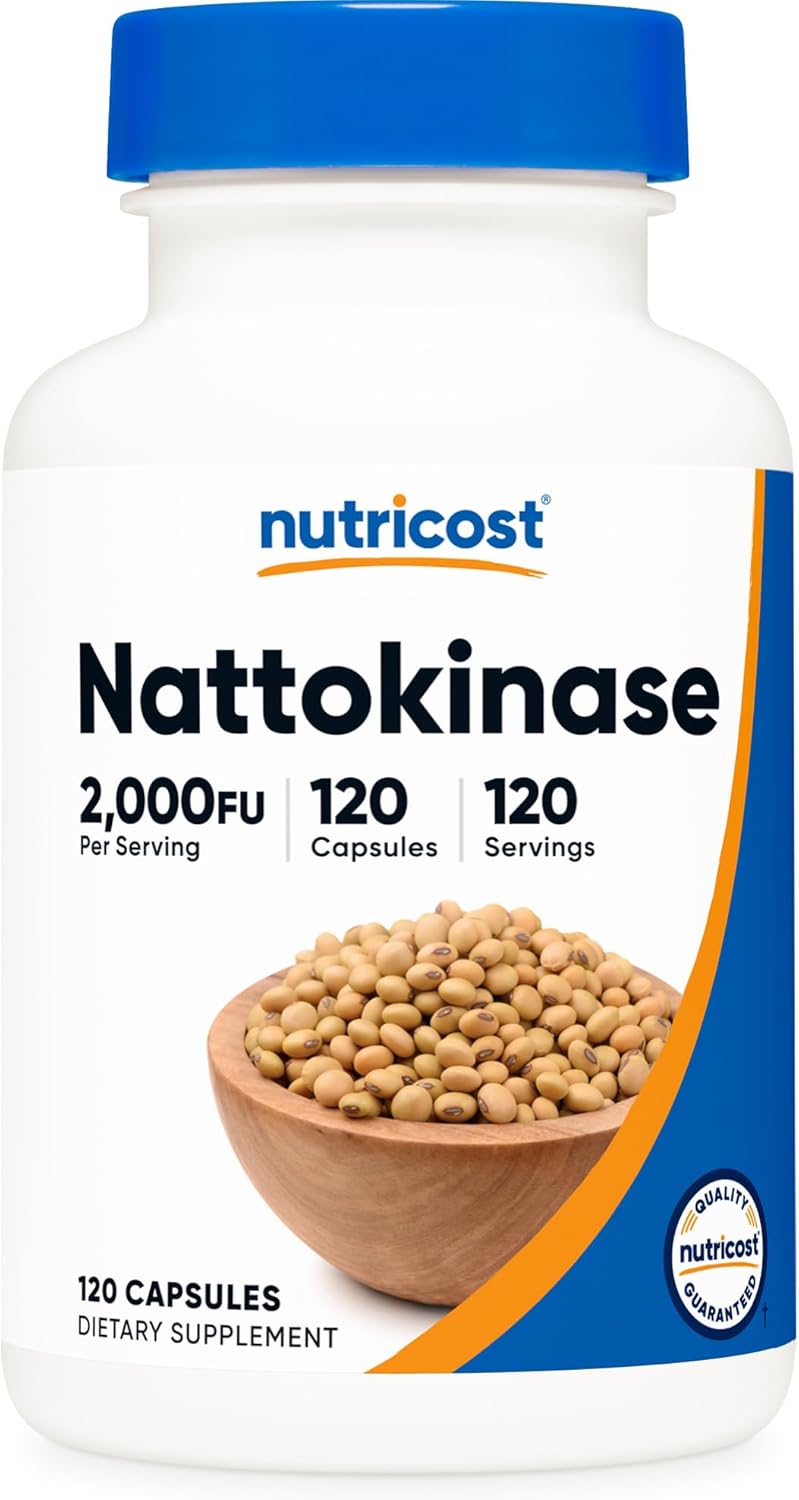
Nutricost Nattokinase 2000FU
2,000 fibrinolytic units per capsule, third-party tested, non-GMO
$14.95
Check Price on Amazon →Dosing and Timing
Clinical research has used 2,000 FU daily, which matches the Nutricost capsule dose exactly. This can be taken as one capsule once daily or split into two 1,000 FU doses with meals. Taking it away from meals (on an empty stomach or well between meals) may enhance fibrinolytic activity since nattokinase may be partially degraded by digestive enzymes when food is present, though this is debated. We take ours mid-morning, 90 minutes after breakfast.
One practical note: nattokinase activity is measured in FU or sometimes in CU (casein units), not milligrams. These activity units are what determines potency. Some products list milligrams without specifying activity. When comparing nattokinase supplements, always compare by FU to make sure you're getting a therapeutically relevant dose, not just a large weight of inactive or low-activity extract.
What Nattokinase Won't Do
Nattokinase is not a replacement for medication in someone with seriously elevated blood pressure (stage 2 hypertension, 140+/90+ mmHg). A 5 mmHg reduction is meaningful but not sufficient for someone who needs 20-30 mmHg of reduction. It also won't correct the underlying lifestyle factors driving hypertension: excess sodium, low potassium, sedentary lifestyle, obesity. These require dietary and lifestyle changes, not enzymes.
Used appropriately, as an adjunct in someone with prehypertension or borderline readings who is already addressing lifestyle factors, nattokinase is one of the more evidence-supported natural additions to a cardiovascular stack. At $14.95 per month, the cost-to-evidence ratio is excellent.
Frequently Asked Questions
How does nattokinase lower blood pressure?
Nattokinase reduces blood pressure through multiple mechanisms: fibrinolytic activity that breaks down fibrin and improves blood fluidity, angiotensin-converting enzyme (ACE) inhibition similar to prescription ACE inhibitor drugs, and reduction of arterial stiffness. A 2008 clinical study found 2,000 FU daily reduced systolic BP by 5.5 mmHg and diastolic by 2.84 mmHg.
Can we take nattokinase if we're on blood pressure medication?
Tell your physician before combining nattokinase with blood pressure medications. The additive effect could lower blood pressure more than intended. Similarly, nattokinase should not be combined with anticoagulants or antiplatelet drugs without medical supervision.
What is the right dose of nattokinase?
Research has used 2,000 FU (fibrinolytic units) per day, typically taken once or split across two doses. FU is the activity unit for nattokinase, not milligrams, so compare products by FU rather than by weight. Nutricost's 2,000 FU per capsule matches the doses used in clinical trials.