NAC earns a place in our stack for a reason most people miss: it's the precursor to glutathione, your body's primary detox molecule. When we started looking at what actually supports the liver, the lungs, and cellular repair simultaneously, NAC kept showing up. It's one of the most underrecognized supplements we track.
Quick Answer
- Glutathione precursor: supplies cysteine, the rate-limiting amino acid in glutathione synthesis
- Hospital-grade liver protection: standard treatment for acetaminophen overdose through glutathione restoration
- Respiratory and immune support: breaks up mucus, supports lung antioxidant defenses
- Mood and brain: modulates glutamate signaling; studied for OCD, addiction, and depression
How NAC Became One of the Most Researched Molecules in Medicine
NAC was first approved in the 1960s as a mucolytic, a drug that breaks down mucus in respiratory conditions. Physicians noticed that beyond loosening secretions, it had powerful protective effects on the liver. By the 1970s, IV NAC had become the standard antidote for acetaminophen (Tylenol) overdose, which kills by depleting glutathione in liver cells until oxidative damage causes acute liver failure. NAC works by restoring glutathione rapidly enough to prevent irreversible damage. It remains the standard of care in emergency medicine for this purpose today.
The research on NAC expanded from there into respiratory disease (COPD, cystic fibrosis), psychiatric conditions (OCD, addiction, bipolar disorder), cardiovascular health, kidney protection during contrast imaging procedures, and more recently, longevity pathways. The breadth of its studied effects reflects the centrality of glutathione to health at the cellular level.
The Glutathione Connection
Glutathione is synthesized inside cells from three amino acids: cysteine, glycine, and glutamic acid. Of these, cysteine is the rate-limiting substrate, meaning your glutathione production is largely determined by how much cysteine you have available. NAC is acetylated cysteine, which is more stable and better absorbed than plain cysteine. Once inside cells, the acetyl group is removed and the cysteine is used directly for glutathione synthesis.
This is why supplementing NAC raises intracellular glutathione more effectively than supplementing glutathione directly. Standard oral glutathione is degraded by digestive enzymes before it reaches circulation. NAC gets through in precursor form and lets cells make their own glutathione on demand. For general supplementation where cost is a concern, NAC at $56.50 for a 3-4 month supply is substantially more economical than liposomal glutathione at $117, though liposomal glutathione provides more direct cellular delivery for the cases where that matters.
Lung Health and Respiratory Benefits
NAC has one of the better evidence bases in the supplement world for respiratory support. A meta-analysis in European Respiratory Journal found that NAC supplementation at 600mg daily significantly reduced the frequency of exacerbations in COPD patients. Multiple studies confirm its mucolytic effect, breaking down disulfide bonds in mucin glycoproteins to thin mucus secretions. This makes it useful not just in disease but for anyone dealing with chronic congestion, post-nasal drip, or recurrent respiratory infections.
The lung antioxidant defense role is also well established. The respiratory epithelium is the first point of contact with inhaled pollutants, smoke, and pathogens, and it maintains a high local concentration of glutathione for this reason. NAC supplementation supports this local antioxidant reserve, which may be particularly relevant for people living in high air pollution areas or with significant smoke or chemical exposure.
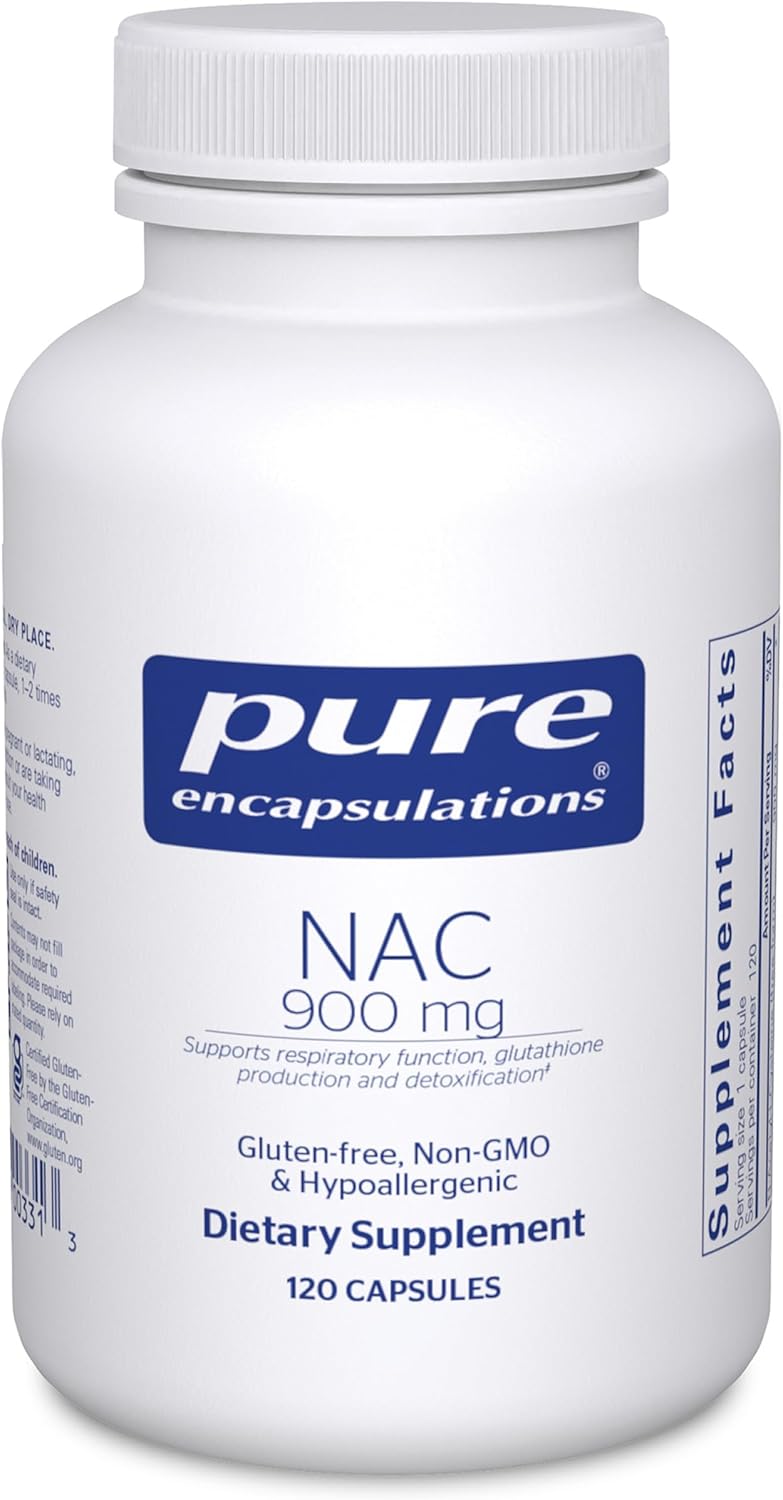
Pure Encapsulations NAC 900mg
900mg N-acetyl cysteine per capsule, hypoallergenic, no fillers
$56.50
Check Price on Amazon →NAC's Role in Brain and Mood Regulation
Beyond its antioxidant and detox roles, NAC modulates glutamate, the brain's primary excitatory neurotransmitter. Dysregulated glutamate signaling is implicated in OCD, addiction, and certain forms of depression and bipolar disorder. NAC acts on the cystine-glutamate antiporter, a transporter that regulates extracellular glutamate levels in the brain. By increasing cystine uptake, NAC indirectly reduces excessive glutamate release, which may explain its studied effects in compulsive behaviors and mood disorders.
Clinical trials have tested NAC for OCD (with modest but significant effects), cannabis and cocaine use disorders (with notable success in reducing cravings), and depression augmentation. These aren't claims that NAC treats mental illness; they're documented effects that suggest its influence on neurological function goes beyond what most supplement labels hint at.
Frequently Asked Questions
What is NAC and why is it called a detox supplement?
NAC (N-acetyl cysteine) is a precursor to glutathione, the body's primary intracellular antioxidant and a key component of Phase II liver detoxification. By supplying cysteine, the rate-limiting amino acid in glutathione synthesis, NAC supports the liver's ability to neutralize and excrete toxins, heavy metals, and drug metabolites.
How much NAC should we take per day?
Most research has used 600-1800mg daily. For general antioxidant and liver support, 600-900mg is a reasonable dose. For respiratory or immune support, 1200-1800mg has been studied. Pure Encapsulations NAC 900mg provides a single-capsule dose that covers most use cases without requiring multiple capsules.
Does NAC help with liver health?
Yes. NAC is the standard-of-care treatment in hospitals for acetaminophen overdose, which works by protecting the liver through glutathione restoration. At supplemental doses, NAC supports ongoing liver detox capacity and has shown benefits in NAFLD trials, reducing liver enzyme markers and improving lipid profiles.