We came across L-Carnosine while researching glycation - the process where sugar molecules attach to proteins and accelerate cellular aging. It's a mechanism not enough people talk about, and carnosine is one of the few compounds with direct evidence for slowing it. The fact that it also shows up in athletic recovery research was a bonus we didn't expect.
Quick Answer
- Anti-glycation: carnosine sacrifices itself to bind reducing sugars before they damage proteins
- Muscle pH buffering: in muscles, carnosine absorbs hydrogen ions during intense exercise, delaying fatigue
- Brain and eye protection: high concentrations in neurons and lens; studied for cognitive aging and cataracts
- Especially valuable for vegans: carnosine is almost exclusively found in animal foods
The Anti-Glycation Mechanism That Makes Carnosine Unique
Most antioxidants work by neutralizing reactive oxygen species. Carnosine works differently: it competes with proteins for binding to reducing sugars (glucose, fructose, ribose) through a process called carbonyl quenching. When carnosine binds to a sugar molecule that would otherwise cross-link with a protein, it forms glycated carnosine instead of glycated protein. The glycated carnosine is then excreted. In essence, carnosine serves as a molecular decoy that absorbs glycating agents before they can damage tissue proteins.
This mechanism has particular relevance for long-lived proteins: collagen, elastin, lens crystallins, and myelin. These proteins turn over slowly and are most vulnerable to AGE accumulation over time. Lab studies have confirmed that carnosine significantly reduces AGE formation in human lens cell cultures and in animal models of diabetes, where glycation damage occurs at an accelerated rate.
Athletic Performance: The Muscle Buffering Role
Carnosine is found in very high concentrations in skeletal muscle, particularly in fast-twitch (type II) fibers. During intense exercise, hydrogen ions accumulate as lactic acid accumulates, lowering intracellular pH and causing the burning sensation that limits performance. Carnosine acts as a pH buffer in muscle tissue, absorbing hydrogen ions and maintaining a less acidic environment, which delays fatigue onset.
This is well-established physiology. Multiple randomized trials have confirmed that higher muscle carnosine levels, achieved through beta-alanine supplementation or direct carnosine supplementation, improve high-intensity exercise capacity. This is the mechanistic reason elite sprinters and strength athletes have higher-than-average muscle carnosine levels, and why dietary meat intake (the main carnosine source) predicts muscle carnosine better than training status alone.
Beta-alanine supplements work for this purpose at lower cost, but they cause a common side effect called paresthesia, a harmless tingling sensation. L-carnosine directly doesn't cause this and provides the full dipeptide rather than just the precursor amino acid, which means it also delivers anti-glycation benefits that beta-alanine alone doesn't provide.
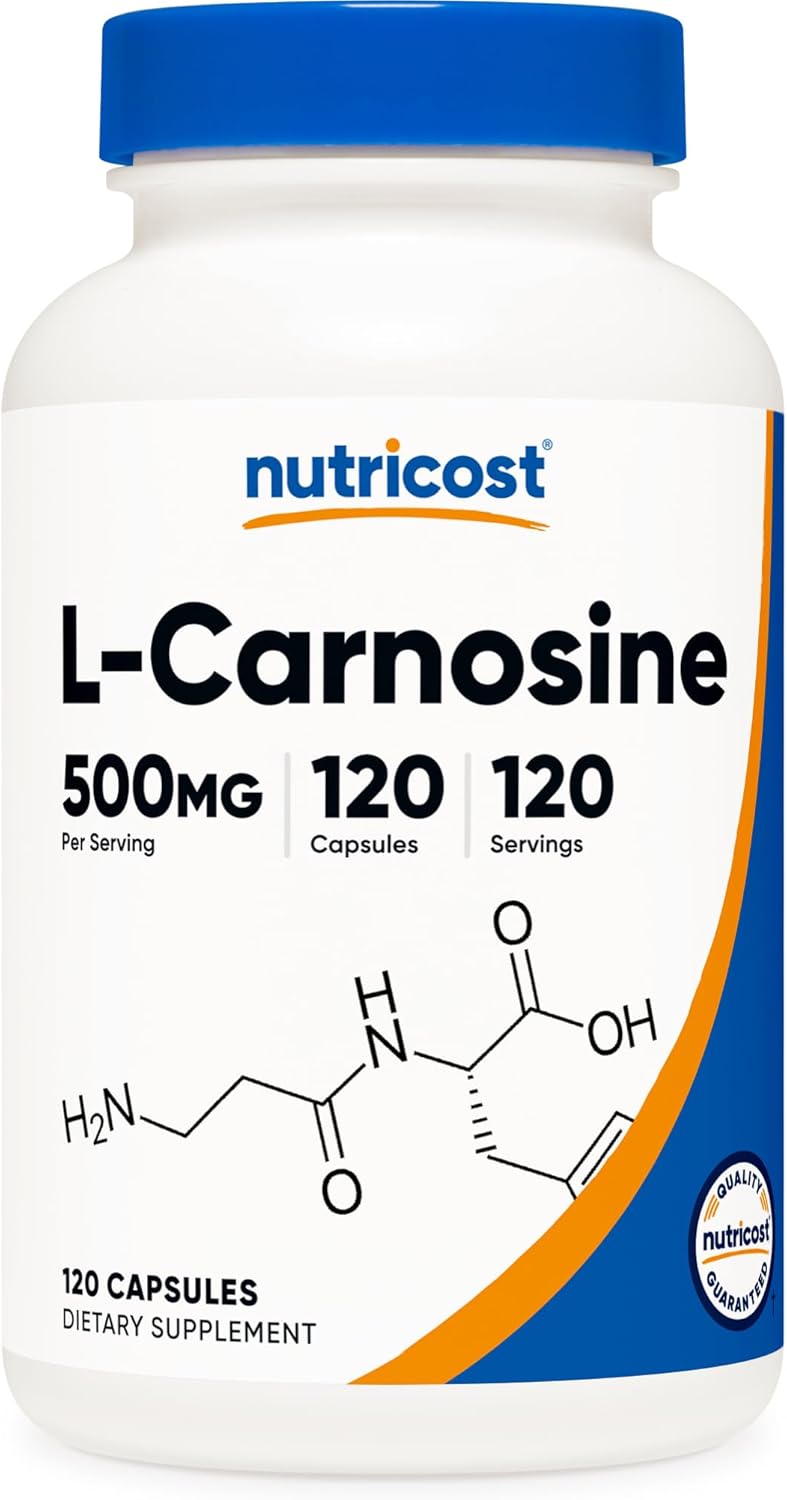
Nutricost L-Carnosine 500mg
500mg L-carnosine per capsule, third-party tested, non-GMO
$34.95
Check Price on Amazon →Cognitive and Neurological Protection
Carnosine is found at high concentrations in the brain, particularly in the olfactory system and in neurons throughout the cortex. Its anti-glycation, antioxidant, and metal-chelating properties are all relevant to neurological aging. Advanced glycation and oxidative damage to brain proteins are features of Alzheimer's and Parkinson's disease pathology. Carnosine can chelate (bind and remove) copper and zinc ions that can promote amyloid aggregation in Alzheimer's.
Animal studies have shown carnosine supplementation reduces amyloid plaque formation and improves cognitive performance in aging rodent models. Human trials are limited but promising: a 2017 study found that carnosine supplementation improved cognitive function in adults with mild cognitive impairment over 3 months. The eye lens contains one of the highest carnosine concentrations in the body, and there's research suggesting N-acetyl-carnosine eye drops (a different form) may slow cataract progression.
Why This Gets Overlooked
L-carnosine is somewhat caught between worlds. Sports nutrition brands sell beta-alanine, not L-carnosine, because beta-alanine is cheaper per unit and the performance research is well established. Longevity brands focus on NAD+, resveratrol, and other pathway-specific compounds with more celebrity researcher backing. Carnosine sits in between: too technical for mainstream supplement marketing, not glamorous enough for the longevity conference circuit.
For people eating plant-based diets, this is actually a meaningful deficiency correction. Omnivores get dietary carnosine from red meat, poultry, and fish. Vegans and vegetarians typically have 20-30% lower muscle carnosine than omnivores. Supplementing L-carnosine at 500-1000mg daily specifically addresses this dietary gap. At $34.95 for 120 capsules (a 2-month supply at 500mg daily), it's a reasonably priced addition to a longevity or performance stack.
Frequently Asked Questions
What is L-carnosine and why is it considered anti-aging?
L-carnosine is a dipeptide made of beta-alanine and histidine. It's found in high concentrations in muscle and brain tissue. Its anti-aging relevance comes primarily from its anti-glycation activity: it can bind to reducing sugars before they react with proteins, preventing the formation of advanced glycation end products (AGEs), which are a major driver of tissue aging and organ damage.
Is L-carnosine the same as beta-alanine?
Beta-alanine is a precursor amino acid used to make carnosine in muscle cells. When you take beta-alanine, your muscles synthesize more carnosine. When you take L-carnosine directly, you're supplementing the final dipeptide. L-carnosine has additional benefits beyond muscle buffering, particularly anti-glycation and neuroprotective effects, that beta-alanine doesn't directly provide.
Can vegans and vegetarians benefit from L-carnosine supplementation?
Yes. Carnosine is found almost exclusively in animal-based foods. Vegans and vegetarians have consistently lower blood and muscle carnosine levels than omnivores. For this population, L-carnosine supplementation is particularly relevant as it corrects a deficiency that meat-eaters rarely experience.