Boron was the supplement our team stumbled on while researching bone density, then couldn't stop reading about. It shows up in the testosterone literature, the estrogen metabolism research, the cognitive function data. At $12 for a several-month supply, the cost-to-evidence ratio is unlike almost anything else we track. It's now in every stack we build.
Quick Answer
- Reduces SHBG: by lowering sex hormone-binding globulin, boron increases available free testosterone
- Bone density support: boron is required for proper calcium and magnesium metabolism in bone
- Vitamin D activation: boron helps convert vitamin D to its active form, amplifying D3 supplementation effects
- Very cheap: at $12.95 for 240 capsules, it's one of the lowest-cost additions to any health stack
Boron's Effect on Free Testosterone and SHBG
Total testosterone and free testosterone are different measurements. SHBG (sex hormone-binding globulin) is a protein that binds to testosterone, rendering it biologically inactive. When SHBG is high, you may have acceptable total testosterone but poor free testosterone, meaning your cells can't access what should be available. Aging tends to increase SHBG, which is one reason free testosterone declines faster than total testosterone with age.
A 2011 pilot study in the Journal of Trace Elements in Medicine and Biology gave 8 healthy men 10mg of boron daily for 1 week. After just 7 days, free testosterone increased by 28% on average and SHBG decreased significantly. Estrogen (specifically 17-beta estradiol) also decreased, a relevant finding for men with estrogen dominance concerns. This was a small, short study, but the speed and magnitude of the SHBG effect is notable. A larger study from Iran in 2015 confirmed that athletes supplementing boron had significantly higher total and free testosterone compared to non-supplementing controls.
The mechanism isn't fully characterized, but boron appears to affect steroidogenesis (hormone synthesis) and influence enzymes involved in sex hormone metabolism. It may also compete with fluoride for binding to enzymes involved in SHBG synthesis, reducing SHBG production. The specifics are still being worked out, but the direction of the effect is consistent across the research.
Bone Density and the Calcium-Magnesium-Boron Triangle
Boron's importance for bone health came to attention when agricultural research showed that animals raised on boron-deficient soil had weaker bones. Human studies followed. Boron is involved in the metabolism of several bone-critical minerals: it helps regulate how calcium and magnesium are absorbed and retained, reduces their urinary excretion, and appears to influence magnesium transport into bone cells.
A landmark 1987 study by the USDA found that postmenopausal women on boron-supplemented diets (3mg daily) retained substantially more calcium and magnesium than those on boron-deficient diets. This calcium-retaining effect means boron may amplify the bone density benefits of calcium and vitamin D supplementation, not by directly building bone but by reducing the loss of the minerals that do. Geographic studies have found inverse correlations between soil boron levels and arthritis rates, with populations in areas of high soil boron (like areas of Israel) having significantly lower rates of arthritis than low-soil-boron regions.
Vitamin D Activation: The Amplification Effect
One of the less discussed roles of boron is its involvement in converting vitamin D from storage form (25-hydroxyvitamin D) to active form (1,25-dihydroxyvitamin D). Boron may modulate the hydroxylase enzymes involved in this conversion. In practical terms, this means boron supplementation may amplify the effectiveness of the vitamin D3 you're already taking.
There's clinical evidence supporting this connection. Studies have found that boron-deficient subjects show impaired vitamin D conversion, and correcting boron status improves the conversion efficiency. For anyone investing in vitamin D3 supplementation, boron at 3-5mg daily is a cheap insurance policy that may meaningfully improve your D3's clinical effect. This is particularly relevant for people whose vitamin D blood levels plateau at supplemental doses they'd expect to push higher.
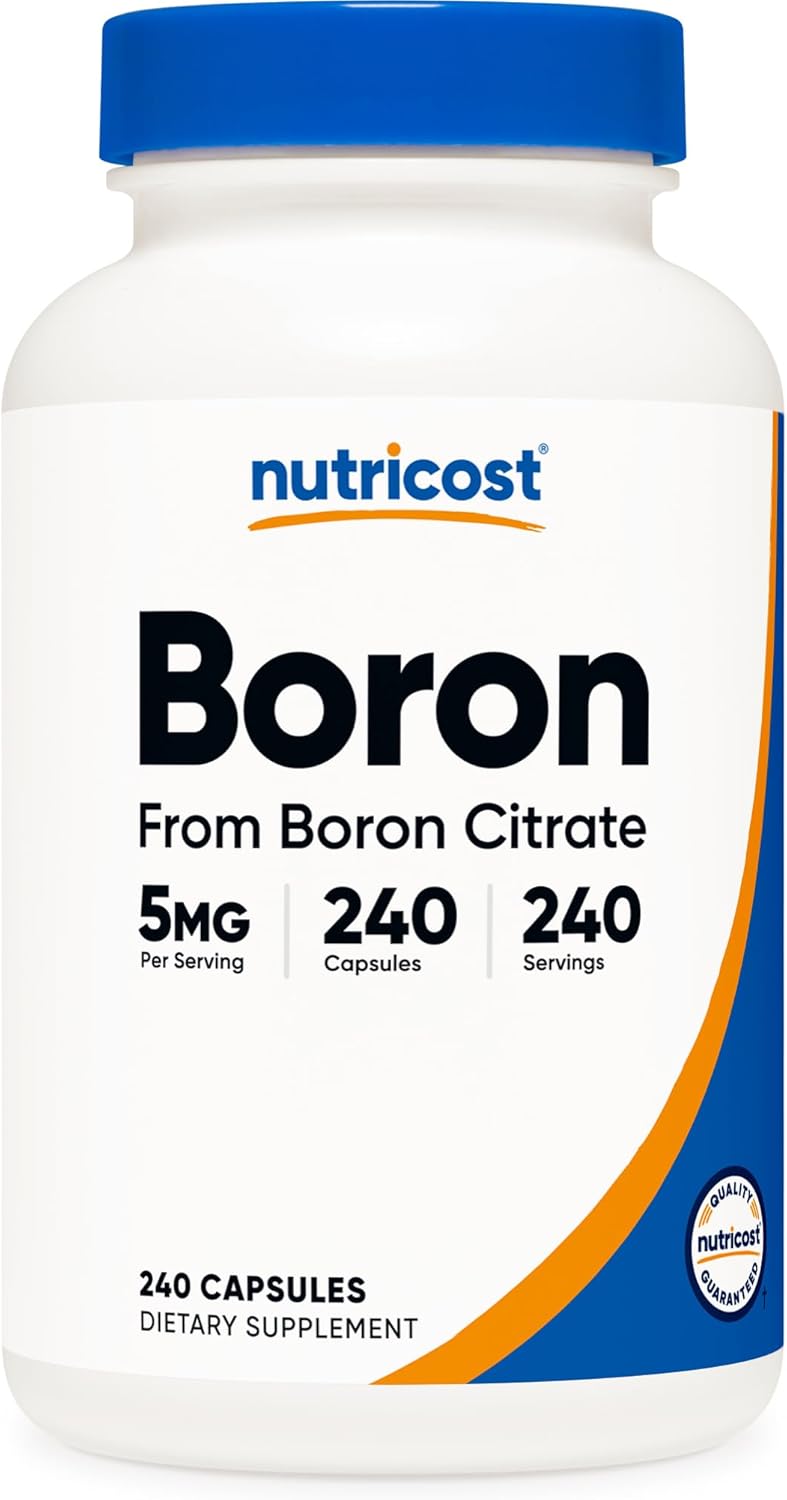
Nutricost Boron 5mg
5mg boron as boron glycinate complex, 240 capsules, third-party tested
$12.95
Check Price on Amazon →Where Boron Doesn't Deliver
Boron is not a testosterone booster in the conventional marketing sense. The free testosterone increase works through SHBG reduction, which means its effect is most meaningful for men who have elevated SHBG. Men with normal SHBG and normal free testosterone won't see dramatic changes in how they feel from boron supplementation. If you're 28 with optimal hormone levels and you're buying boron hoping to feel like you're on a low dose of testosterone, that's not what the research supports.
The strongest case for boron is in men over 40 with declining free testosterone, people supplementing vitamin D who want to optimize conversion efficiency, those with a family or personal history of osteoporosis, and anyone with joint pain and no clear cause. In those contexts, the $12.95 price makes it one of the easiest recommendations in any supplement stack. The worst case is that it doesn't move the needle and you've spent $13. The best case is you've addressed a real mineral gap that was quietly affecting multiple systems.
Frequently Asked Questions
How does boron increase free testosterone?
Boron reduces sex hormone-binding globulin (SHBG), a protein that binds to testosterone and renders it inactive. By lowering SHBG, more free testosterone becomes available in circulation. A 2011 study found that 10mg of boron daily for 1 week significantly increased free testosterone and reduced SHBG in male participants.
What dose of boron should we take?
Research on testosterone effects has used 6-10mg daily. For bone and joint benefits, 3-6mg daily has been studied. Most people don't need to exceed 10mg per day for supplementation purposes. The tolerable upper intake level is considered to be around 20mg per day for adults.
Does boron help with arthritis?
Observational data from geographic studies found that populations with low soil boron had higher arthritis rates. A small clinical trial found 6mg of boron daily reduced pain and joint stiffness in osteoarthritis patients. The evidence is early but consistent with boron's role in mineral metabolism and anti-inflammatory signaling.