Gut health didn't seem like a longevity topic to us until we started reading the Akkermansia research. This isn't the usual probiotic marketing - it's a specific strain that lines the gut wall, improves metabolic markers, and keeps showing up in studies on people who age exceptionally well. At iVitaLab, when a pattern like that appears consistently across independent research, we pay attention.
Quick Answer
- Gut barrier specialist: Akkermansia lives in the mucus layer and strengthens gut barrier integrity
- Metabolic benefits: human trials show improved insulin sensitivity, reduced inflammation markers
- Longevity correlation: centenarians and healthy older adults consistently have higher Akkermansia abundance
- Needs special delivery: anaerobic bacterium; standard probiotic formats kill it before it reaches your gut
What Makes Akkermansia Different from Other Probiotics
Most probiotic supplements contain Lactobacillus and Bifidobacterium species because they're robust enough to survive the manufacturing and shelf life process. Akkermansia muciniphila is an anaerobic bacterium, meaning it dies rapidly when exposed to oxygen. This isn't a minor technical challenge; it's why Akkermansia supplements didn't exist until very recently and why most products on the market, even ones claiming to contain it, may not deliver live bacteria to the gut.
What Akkermansia does in the gut is uniquely valuable. It colonizes the mucus layer of the large intestine and maintains gut barrier integrity by stimulating mucus production and strengthening the tight junction proteins that prevent bacterial endotoxins from crossing into the bloodstream. This "leaky gut" mechanism is implicated in systemic inflammation, metabolic disease, and accelerated aging. Having abundant Akkermansia is essentially having a well-maintained gut wall.
The Human Trial Evidence
The landmark 2019 study from Professor Patrice Cani's lab at UCLouvain was the first human trial of Akkermansia supplementation. Published in Nature Medicine, it enrolled 40 overweight or obese adults with metabolic syndrome and tested two forms of Akkermansia: live bacteria and pasteurized bacteria, which still retain surface proteins that mediate some benefits. Results: pasteurized Akkermansia at 10 billion CFU daily for 3 months improved insulin sensitivity, reduced plasma cholesterol, reduced inflammation markers (including LPS-binding protein, a marker of gut barrier leakage), and reduced waist circumference versus placebo. Live Akkermansia trended in the same direction. Tolerability was excellent.
A 2021 study in Gut analyzing centenarian microbiomes found that adults over 100 had significantly higher Akkermansia abundance than those in their 70s. This isn't causation, but the consistency of this finding across populations and studies keeps the longevity angle credible. A 2022 paper in Cell Host and Microbe found that Akkermansia produces a membrane protein, Amuc_1100, that directly activates TLR2 on intestinal cells, triggering a cascade that improves gut barrier function and reduces inflammatory signaling. That's a specific mechanism with testable predictions.
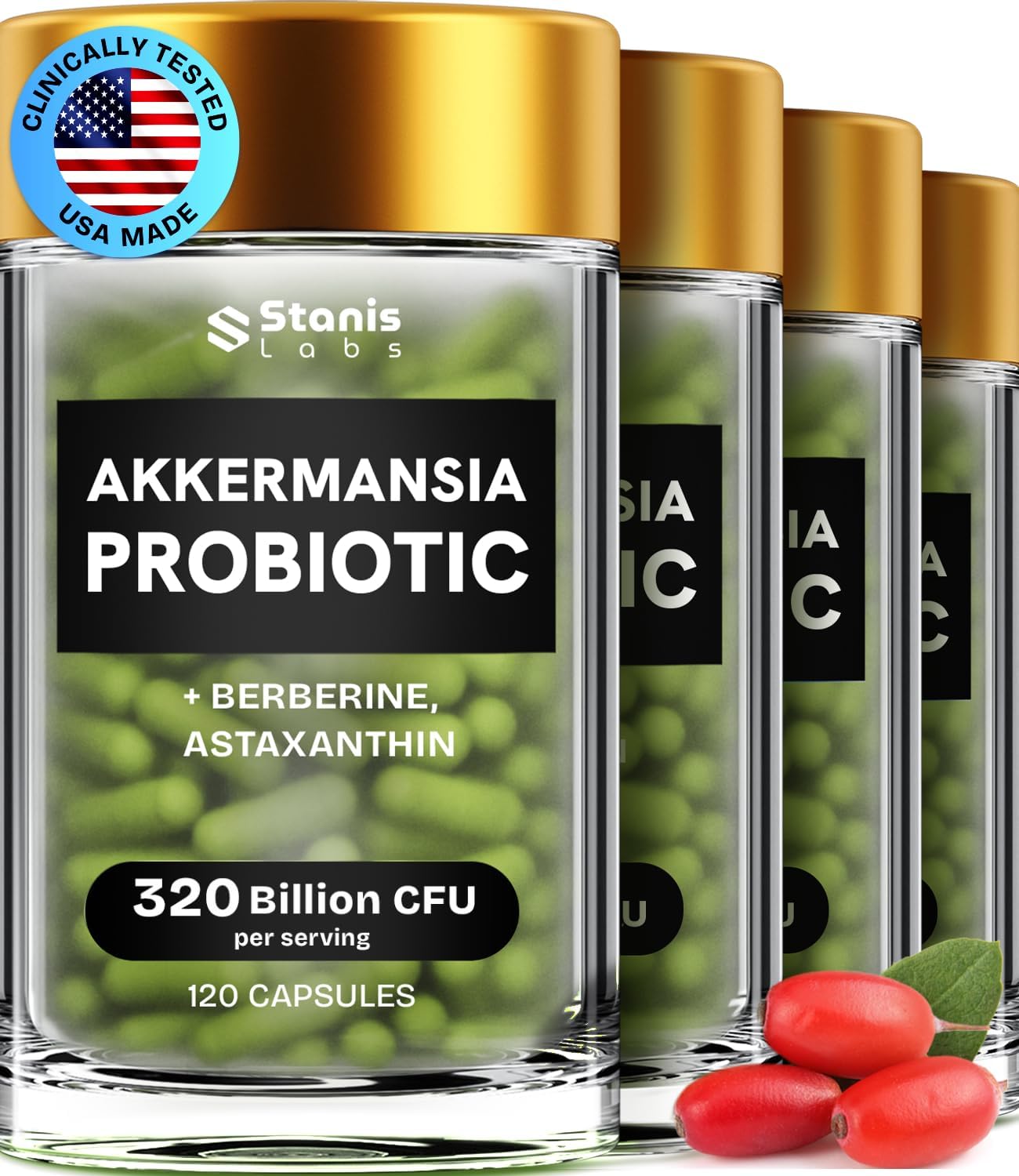
Stanis Labs Akkermansia Probiotic 320B CFU
320 billion CFU, patented anaerobic encapsulation, guaranteed live delivery
$60.00
Check Price on Amazon →Why CFU Count and Delivery Matter Enormously Here
The research used doses of 10 billion CFU (colony forming units) in a single daily dose. For Akkermansia specifically, the challenge is that a large percentage of any probiotic dies during transit through the stomach and small intestine. Starting with a very high CFU count (like the 320 billion in the Stanis Labs product) compensates for this attrition. This is especially critical for Akkermansia given its oxygen sensitivity.
Stanis Labs uses a nitrogen-purged encapsulation process to maintain anaerobic conditions around the bacteria through manufacturing, shipping, and the digestive process. This technology is genuinely what separates effective Akkermansia supplementation from products that list it on the label but deliver minimal viable organisms to the colon. The $60 price reflects that technological complexity, not just marketing.
Supporting Akkermansia Growth Through Diet
Akkermansia is what's called a "keystone species" in the gut ecosystem: its presence encourages the growth of other beneficial bacteria and its absence allows pathogenic communities to fill the space. Diet significantly affects Akkermansia abundance. Foods that support its growth include polyphenol-rich items like pomegranate, berries, green tea, and dark chocolate. Prebiotic fibers from garlic, onion, and leeks feed the bacteria that in turn support the environment Akkermansia needs. High-fat, low-fiber Western diets are consistently associated with reduced Akkermansia levels.
This means supplementation is most effective when combined with dietary support. Taking an Akkermansia supplement while eating a diet that actively depletes gut flora is working against yourself. The supplement seeds the gut; the diet determines whether the colony can establish and persist.
Frequently Asked Questions
What does Akkermansia do in the gut?
Akkermansia muciniphila colonizes the mucus layer of the gut and strengthens the intestinal barrier by promoting mucus production. A healthy gut barrier prevents bacterial endotoxins from leaking into the bloodstream, which would otherwise trigger systemic inflammation. Akkermansia also produces short-chain fatty acids and signals that improve insulin sensitivity and metabolism.
How do you take Akkermansia supplements?
Akkermansia is an anaerobic bacterium, meaning it cannot survive oxygen exposure. This makes standard probiotic formats inadequate. Stanis Labs uses a patented encapsulation method to protect the live bacteria through digestion. Take it on an empty stomach or as directed, away from antibiotics or antimicrobial supplements.
Can you increase Akkermansia through diet alone?
Yes, to some extent. Akkermansia thrives on polyphenols (found in berries, pomegranate, green tea) and prebiotic fibers. People who eat Mediterranean-style diets with high polyphenol intake tend to have higher Akkermansia levels. For people with genuinely depleted Akkermansia, direct supplementation produces faster restoration.