AHCC wasn't on our radar until one of our team members was preparing for a medical procedure and started researching immune support with actual clinical data behind it. Most immune supplements are backed by in-vitro studies or rodent models. AHCC has over 30 human clinical trials. That gap in evidence quality is why it earned a permanent spot in our stack.
Quick Answer
- Alpha-glucan polysaccharides: the active compounds that stimulate NK cells, dendritic cells, and T-helper responses
- 30+ clinical trials: more human research than almost any other mushroom supplement
- HPV clearance evidence: two clinical trials show significant HPV clearance rates in persistently infected women
- Quality matters: authentic AHCC is specifically from shiitake mycelia; knockoffs exist and don't have the same data
What AHCC Actually Is
AHCC is not a generic mushroom extract. It's a specific proprietary compound produced by culturing Lentinula edodes (shiitake mushroom) mycelia in a liquid medium, allowing them to grow and produce a rich fermentation broth, which is then processed and standardized. The key active compounds are alpha-glucans (particularly alpha-1,4 glucans), which are structurally different from the beta-glucans found in most mushroom supplements. This structural difference appears to be important for the specific immune mechanisms AHCC affects.
AHCC was developed in Japan in the 1980s through collaboration between Amino Up Chemical Company and the University of Tokyo. It's now used in over 700 hospitals in Japan and 30+ countries, primarily in integrative oncology settings. The research base includes over 30 human clinical trials, an unusually high number for a supplement ingredient. This research pedigree is why AHCC stands apart from most mushroom products in the supplement category.
The Immune Mechanism: NK Cells and Dendritic Cells
AHCC's primary immune mechanism is upregulation of natural killer (NK) cell activity. NK cells are innate immune cells that don't require prior sensitization to kill infected or cancerous cells. They're a first line of defense against viral infections and early-stage cancer. Multiple studies have confirmed that AHCC supplementation at 1-3g daily significantly increases NK cell cytotoxicity (the ability of NK cells to kill target cells) within 2-4 weeks of supplementation.
AHCC also increases dendritic cell populations and function. Dendritic cells are the master regulators of adaptive immunity; they process antigens and present them to T cells, essentially directing the specific immune response. A 2011 study found AHCC supplementation significantly increased the number of CD11c+ dendritic cells and enhanced their cytokine production. This suggests AHCC supports both the fast innate immune response and the slower but more targeted adaptive response.
The HPV Clearance Data
The research on AHCC and HPV is the most specific and striking in its clinical literature. Persistent HPV infection is responsible for the majority of cervical cancers, and there are no approved treatments to clear HPV once contracted; the standard approach is watchful waiting and hope the immune system clears it naturally. A significant percentage of women with persistent high-risk HPV will develop pre-cancerous lesions.
A 2014 pilot study at the University of Texas Health Science Center tested 3g of AHCC daily in 10 women with persistent HPV infection. After 6 months, 5 of 10 had complete HPV clearance confirmed by PCR testing. The pilot result was striking enough to prompt a funded randomized controlled trial, published in 2022 in Frontiers in Oncology, which enrolled 50 women and found AHCC led to significantly higher HPV clearance rates than placebo. The findings are preliminary by pharmaceutical standards, but for a supplement, two clinical trials showing active infection clearance is remarkable.
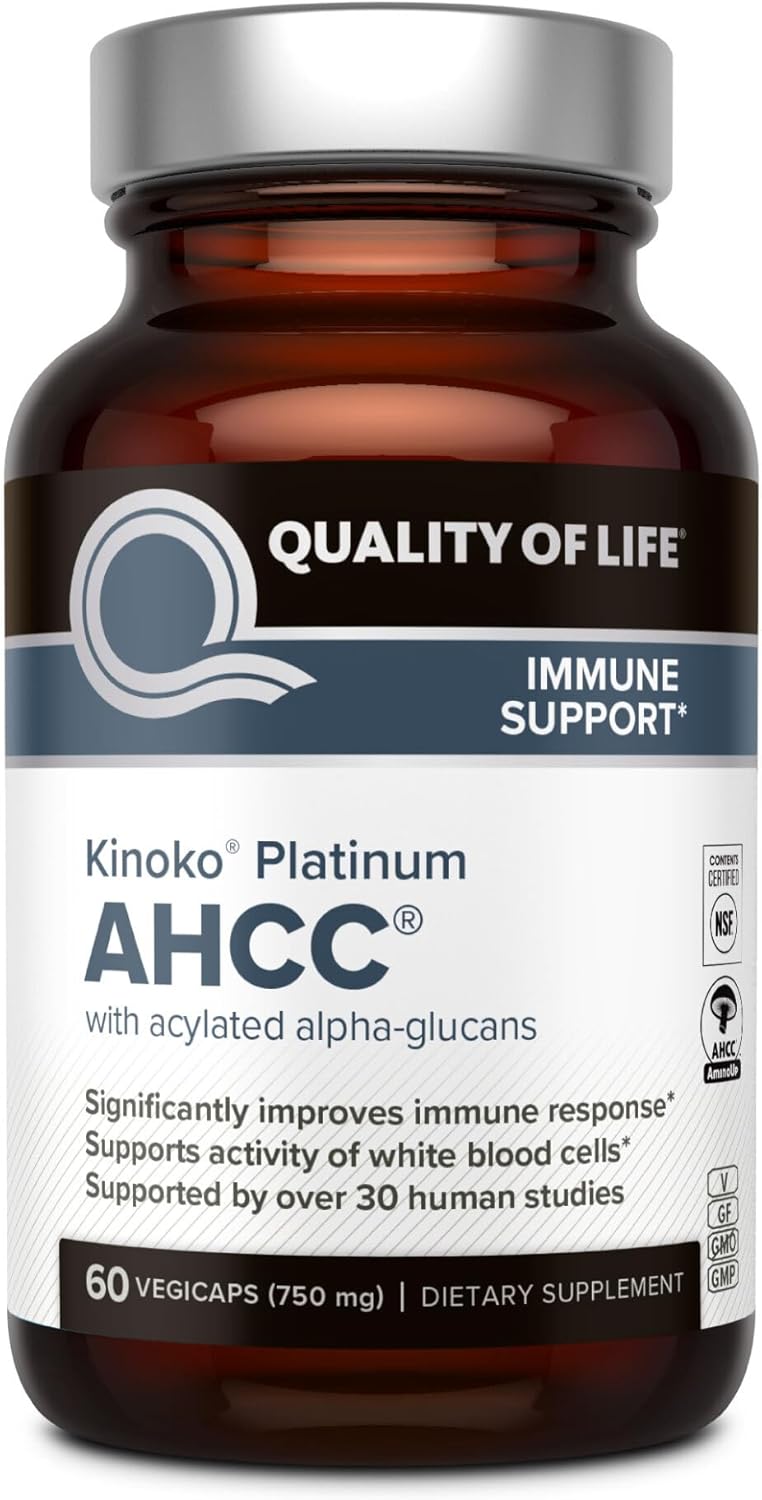
Quality of Life Kinoko Platinum AHCC 750mg
Genuine AHCC from Amino Up, 750mg per capsule, the research-backed formulation
$79.95
Check Price on Amazon →Why Not Every AHCC Product Is Equivalent
Authentic AHCC is manufactured exclusively by Amino Up Chemical in Japan and licensed to specific supplement companies. The clinical research was conducted with this specific ingredient. Generic "AHCC" or "shiitake extract" products are not the same compound and don't have the clinical data behind them. Quality of Life's Kinoko Platinum uses the genuine licensed AHCC ingredient, which is why it's cited in research and why the price reflects a licensed proprietary ingredient rather than a generic mushroom powder.
The $79.95 price is the genuine downside of this supplement. For general immune support in a healthy person, there are cheaper options. The case for AHCC is strongest for people with specific immune vulnerabilities: cancer patients or survivors, people with persistent viral infections, those with immunosuppressive conditions, or anyone who wants the supplement with the most clinical data in the immune mushroom category regardless of cost.
Frequently Asked Questions
What is AHCC and how does it support the immune system?
AHCC (Active Hexose Correlated Compound) is a proprietary extract from cultured Lentinula edodes (shiitake) mycelia. Its key active components are alpha-glucans that stimulate natural killer cell activity, dendritic cell maturation, and T-helper cell responses. AHCC has been studied in over 30 clinical trials and is used in integrative oncology settings in Japan.
Does AHCC help with HPV?
A 2014 clinical trial showed that AHCC at 3g daily led to HPV clearance in 5 of 10 women with persistent HPV infection after 6 months. A 2022 randomized controlled trial with 50 participants confirmed this result with statistical significance. These are small trials but have generated significant research interest.
Is AHCC safe to take with chemotherapy?
AHCC has been used in integrative oncology for over 25 years, primarily in Japan. Multiple studies in cancer patients undergoing chemotherapy have found that AHCC supplementation improved immune markers and quality of life without interfering with treatment. However, anyone undergoing cancer treatment should discuss AHCC use with their oncologist before starting.