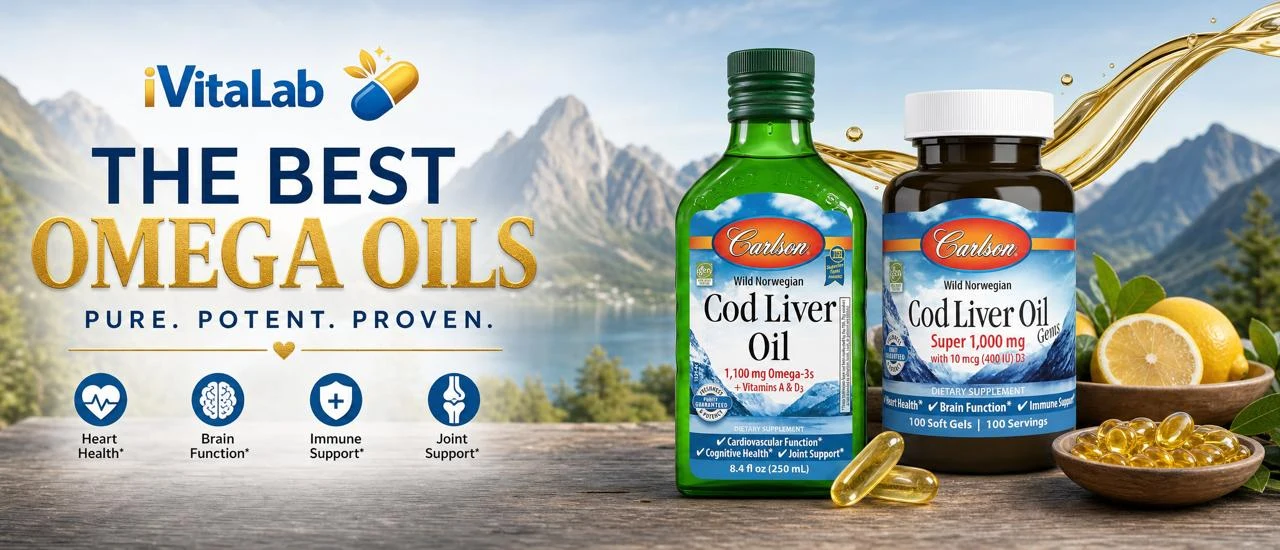
The case for omega-3 supplementation is among the strongest in nutritional science. Decades of clinical research have established that EPA (eicosapentaenoic acid) and DHA (docosahexaenoic acid) support cardiovascular health, reduce systemic inflammation, support brain function and mood, and play a role in joint recovery. The American Heart Association recommends omega-3 supplementation for people with established heart disease and at least two servings of fatty fish per week for everyone else.
The problem is that most people don't get close to two fatty fish servings per week, and most omega-3 supplements on the market are poorly formulated. Choosing the wrong product means lower absorption, potential oxidation harm, and wasted money. This guide breaks down what actually matters.
Quick Answer
- Top pick (liquid): Carlson Wild Norwegian Cod Liver Oil 1100mg — triglyceride form, wild-caught, naturally occurring vitamins A+D, third-party tested.
- Top pick (softgel): Carlson Wild Norwegian Cod Liver Oil Softgels — same Norwegian source and quality, convenient daily dose format.
- Daily dose: 1,000–2,000mg EPA+DHA combined for maintenance. Take with food containing fat.
- Form matters: Choose triglyceride (TG) form — not ethyl ester. Check the label or the brand's website.
- Freshness test: Fresh omega-3 oil should have a mild oceanic scent, not strong fish smell.
The Omega-3 Research: What's Actually Proven
The evidence base for omega-3s is large but nuanced. Here's what clinical data consistently shows:
Triglycerides: The FDA has approved high-dose omega-3 formulations specifically for reducing very high triglycerides (above 500 mg/dL). At 4g EPA+DHA daily, triglyceride reduction of 30–50% has been documented in multiple RCTs. At maintenance doses (1–2g), modest but consistent reductions are seen.
Inflammation: EPA is metabolized into anti-inflammatory eicosanoids called resolvins and protectins, which compete with arachidonic acid-derived pro-inflammatory compounds. Multiple studies show reductions in CRP, IL-6, and other inflammatory markers with consistent omega-3 supplementation. The effect is cumulative — it builds over months, not days.
Cardiovascular risk: Results here are more mixed than early research suggested. High-quality recent meta-analyses (including REDUCE-IT, which used 4g EPA-only) show meaningful cardiovascular event reduction. Standard-dose supplementation shows smaller but positive signals. The quality of the supplement matters significantly for these outcomes.
Brain and mood: DHA is the primary structural fat in brain tissue. Low omega-3 status is associated with higher rates of depression and cognitive decline. While omega-3 supplementation alone isn't a treatment for clinical depression, multiple studies show supportive effects particularly when baseline intake is low.
Joint health: EPA and DHA reduce the production of prostaglandins and leukotrienes that drive joint inflammation. Studies in rheumatoid arthritis patients show consistent reductions in morning stiffness and tender joint count with 2–3g EPA+DHA daily.
The Form Problem: Why Most Fish Oil Absorbs Poorly
This is the most critical and most overlooked issue in omega-3 supplementation. Natural fish oil exists in triglyceride form — the same structure as fat in whole fish. Your body recognizes and absorbs it efficiently because lipase enzymes work on it naturally.
Most commercial fish oil processing converts the natural triglycerides to ethyl ester form for concentration and cost purposes. Ethyl ester omega-3s absorb significantly less efficiently than triglyceride form — particularly without a fatty meal. A landmark bioavailability study found that ethyl ester fish oil absorbed 73% as well as triglyceride form in fasted conditions, and that gap closes (but doesn't disappear) with a high-fat meal.
Premium manufacturers re-convert their ethyl esters back to re-esterified triglyceride (rTG) form after concentration, which restores natural bioavailability. Quality cod liver oil that hasn't been molecularly distilled stays in its natural triglyceride form from the start.
| Form | How It's Made | Bioavailability | Price |
|---|---|---|---|
| Natural TG | Cold-pressed from fish, unaltered | Highest | Moderate |
| Re-esterified TG (rTG) | Concentrated as EE, then re-converted | High | Higher |
| Ethyl Ester (EE) | Chemically processed for concentration | Lower (especially fasted) | Lower |
| Phospholipid (krill) | From krill, different structure | High (no food needed) | Highest |
Oxidation: The Hidden Quality Problem
Omega-3 fatty acids are polyunsaturated, which means they have multiple double bonds that react with oxygen. This oxidation produces aldehyde compounds that are not just flavorless — they're biologically harmful. Some research suggests that oxidized omega-3 supplementation may negate the cardiovascular benefits of fresh omega-3s, and potentially cause net harm.
The TOTOX (total oxidation) score is the industry-standard freshness measure. Values below 26 are considered fresh by international standards. A 2015 study that tested 171 fish oil supplements found that over 80% exceeded Norwegian freshness standards at time of purchase. This problem is pervasive and the market is largely unregulated for it.
Indicators of quality omega-3 freshness:
- Low TOTOX score (published by the manufacturer or third-party lab)
- Antioxidant preservation — d-alpha tocopherol (natural vitamin E) in the formulation
- Opaque or amber glass packaging (not clear plastic that allows light oxidation)
- Short supply chain from source to bottle
- Refrigeration recommendation after opening
Our Top Picks: Carlson Wild Norwegian in Both Formats
Carlson's Wild Norwegian Cod Liver Oil line meets every quality criterion that separates serious omega-3 supplementation from the background noise of the market. Wild-caught Norwegian Arctic cod, cold-processed to preserve natural triglyceride form and naturally occurring vitamins A and D, third-party tested for TOTOX and contaminants, with antioxidant preservation. The company has been producing this product since 1965 and their quality consistency is well-documented across decades of independent testing.
Best for: Flexible Dosing
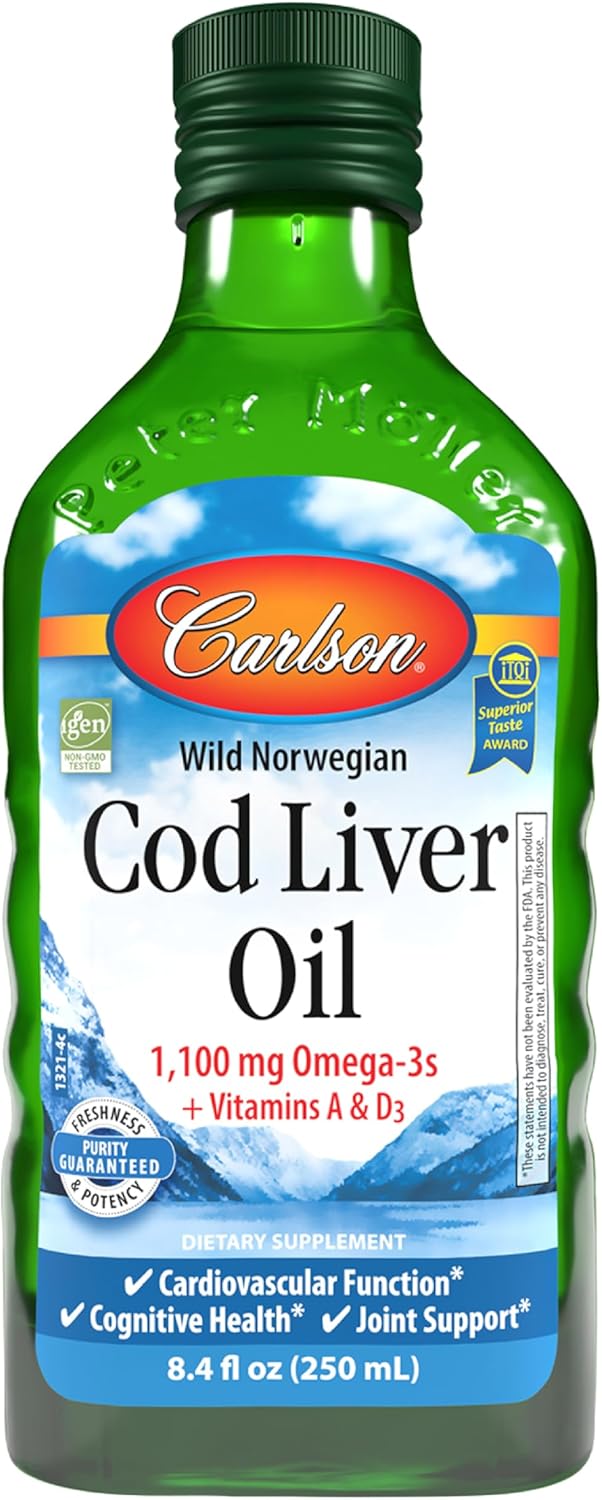
Carlson Cod Liver Oil 1100mg (Liquid)
Teaspoon format allows precise dosing. Norwegian lemon flavor. 8.4 fl oz bottle. ~500mg EPA+DHA per tsp, naturally occurring vitamins A+D.
~$28–32
View on Amazon →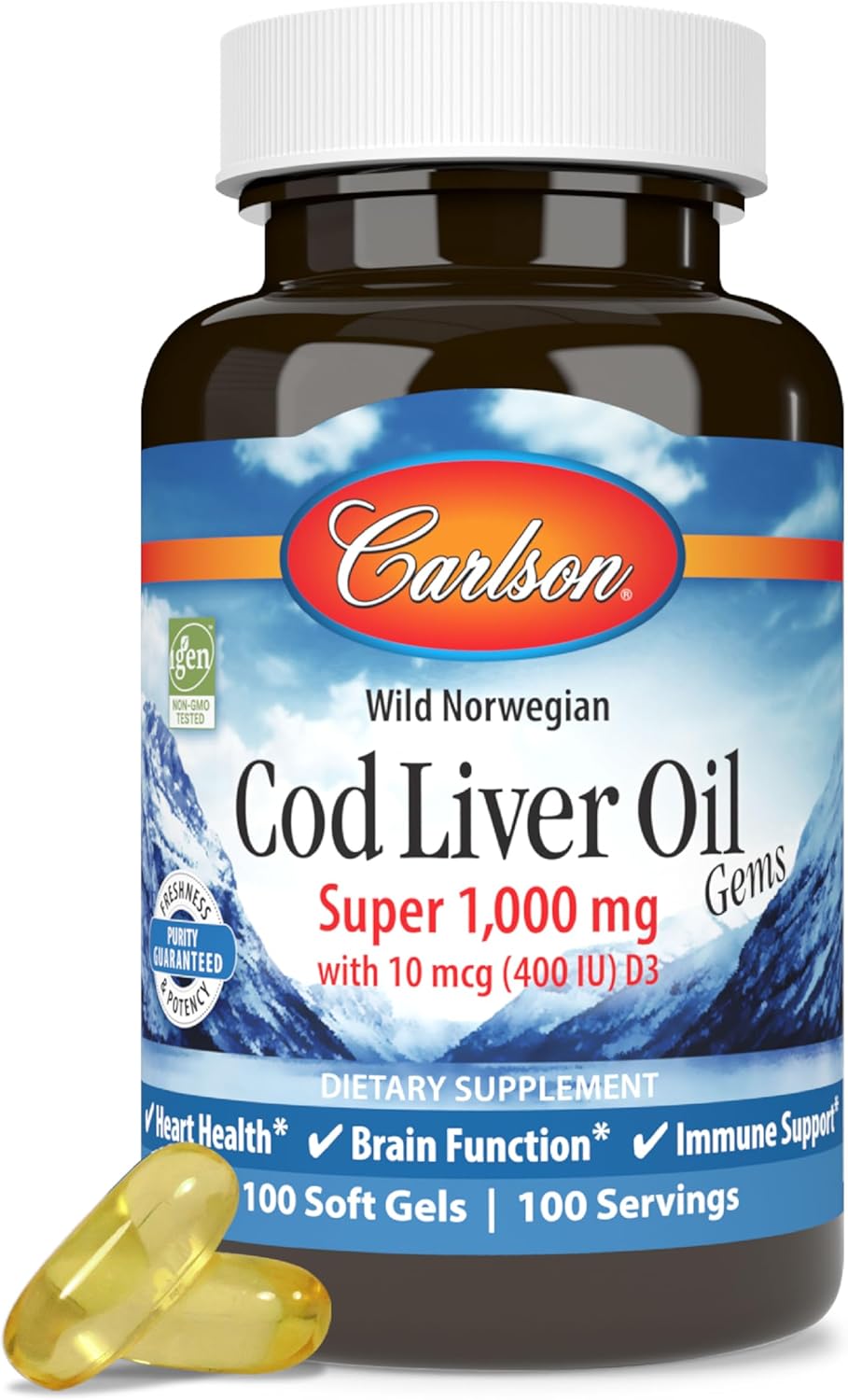
Best for: Daily Convenience
Carlson Cod Liver Oil Softgels
Same wild Norwegian source and quality as the liquid. Softgel format — no taste, easy to travel with. 1–2 per day for full maintenance dose.
~$28–35
View on Amazon →What to Look For in Any Omega-3 Supplement
1. Source and Purity
Small, fatty, short-lived fish (anchovies, sardines, mackerel, cod) accumulate less mercury and PCBs than large predatory fish. These are the correct omega-3 sources. Any reputable omega-3 supplement should be third-party tested for heavy metals and PCBs with published results. Norwegian and Icelandic sourcing is associated with the strongest quality standards and environmental certification.
2. EPA+DHA Content Per Dose
Read the Supplement Facts panel carefully. "Fish oil 1000mg" is not the same as "1000mg EPA+DHA." A 1000mg fish oil softgel commonly contains only 300mg of actual omega-3s. You want to calculate your daily EPA+DHA intake, not the total oil weight. Aim for 1,000–2,000mg EPA+DHA combined for daily maintenance.
3. Molecular Form
Look for "triglyceride form," "TG form," or "re-esterified triglycerides (rTG)" on the label or the brand's website. If the label doesn't mention form at all, assume ethyl ester. Natural cold-processed cod liver oil is automatically in triglyceride form.
4. Freshness Verification
Choose brands that publish TOTOX scores or reference third-party freshness testing. The omega-3 market is unregulated for oxidation — this certification is voluntary and meaningful. Brands that do it are making a statement about their quality standards.
5. Antioxidant Preservation
Natural vitamin E (d-alpha tocopherol) as a preservative is a quality signal. Avoid products using dl-alpha tocopherol (synthetic, less effective) or no preservation at all.
How to Take Omega-3 for Best Results
Always take omega-3 supplements with a meal containing fat. This applies even to triglyceride-form products — bile release from a fat-containing meal enhances all omega-3 absorption. If you're taking ethyl ester form, a high-fat meal is especially critical.
Consistency matters more than timing. Omega-3 works by shifting your cellular phospholipid profile over weeks and months. The anti-inflammatory and cardiovascular benefits accumulate with regular daily intake — taking it intermittently doesn't build the same tissue-level effect.
Refrigerate after opening. Omega-3 degrades faster at room temperature, especially once the packaging seal is broken. If your softgels have a strong fish smell when you open the bottle, that product is oxidized — return or discard it.
The Bottom Line
Omega-3 supplementation is one of the highest-evidence interventions in nutritional medicine. Getting the right product matters: triglyceride form, wild-sourced, third-party tested for freshness, antioxidant preserved.
Carlson's Wild Norwegian Cod Liver Oil — in either liquid or softgel format — checks every box. It's the same Norwegian Arctic source in both, the same cold-processed quality, and a company with a 60-year track record of getting this right.
Frequently Asked Questions
Can you take omega-3 every day?
Yes — daily supplementation is safe and recommended for most adults. At standard doses (1–2g EPA+DHA daily), omega-3 is well tolerated. At higher doses above 3g daily, there's a theoretical mild increase in bleeding time, which is relevant if you take blood thinners or are preparing for surgery. At any dose, inform your physician.
Is cod liver oil the same as fish oil?
They both provide EPA and DHA, but cod liver oil also delivers naturally occurring vitamins A and D in a cold-processed product. Standard fish oil focuses purely on omega-3 concentration without additional fat-soluble vitamins. If you're looking for maximum EPA+DHA per dose and already manage D and A separately, concentrated fish oil may deliver more per capsule. If you want a single supplement that covers omega-3s, D, and A together, quality cod liver oil does it in one.
How long before you see results from omega-3?
Measurable changes in blood triglycerides can be seen within 4–8 weeks at maintenance doses. Anti-inflammatory effects measured by markers like CRP typically emerge over 8–12 weeks of consistent use. Subjective improvements in joint comfort and mood, when they occur, usually appear within 6–12 weeks. The full lipid-modulating and structural brain benefits accrue over months of daily use.
This article contains affiliate links. iVitaLab may earn a commission on qualifying purchases at no additional cost to you. All recommendations are based on quality criteria and clinical evidence — we only recommend products that meet our sourcing and purity standards.