Cod liver oil has been used as medicine for centuries — Norwegian fishermen gave it to their children through brutal Arctic winters long before the supplement industry existed. Modern clinical research has validated what those fishermen already knew: this is one of the most complete dietary supplements available, delivering omega-3 fatty acids alongside fat-soluble vitamins A and D in their natural, bioavailable form.
The problem is that the modern supplement market has introduced a lot of low-quality cod liver oil into that tradition. High-temperature processing destroys the natural vitamins, which manufacturers then add back synthetically at inflated levels. Oxidation from poor storage or packaging makes the oil biologically harmful. And lemon flavoring masks the smell of rancidity that should be a red flag.
This guide breaks down exactly what to look for — and what to avoid — so you can choose confidently.
Quick Answer
- Top pick: Carlson Wild Norwegian Cod Liver Oil 1100mg — wild-caught, cold-processed, naturally occurring A+D, 50+ years of quality.
- Key criteria: Wild-caught Norwegian cod, cold-processed (not molecularly distilled), natural vitamins A and D (not synthetic add-backs), third-party tested for oxidation.
- Daily dose: 1–2 softgels for most adults. Start with 1 if new to omega-3 supplementation.
- Avoid: Products with excessive synthetic vitamin A (above 5,000 IU per serving), strong fishy smell after opening, no third-party testing certification.
What Makes Cod Liver Oil Different From Regular Fish Oil
Standard fish oil is refined from a variety of fatty fish species — anchovies, sardines, mackerel — and is valued specifically for its EPA and DHA omega-3 content. Quality fish oil is measured by omega-3 concentration per softgel. That's the whole story.
Cod liver oil comes from a single source: the liver of Atlantic or Pacific cod. The liver, unlike muscle tissue, concentrates fat-soluble vitamins naturally as the fish metabolizes its diet. Authentic cod liver oil that has been gently cold-processed retains those vitamins — particularly vitamin A (as retinol) and vitamin D3 — at meaningful levels without any fortification.
This distinction matters. You're not just getting omega-3s. You're getting a natural fat-soluble vitamin complex that historically addressed vitamin D deficiency, rickets, and immune suppression in Northern European populations who got minimal sunlight for half the year. The synergy between the omega-3s and the fat-soluble vitamins is real: vitamin D absorption is enhanced by dietary fat, which cod liver oil provides simultaneously.
The Processing Problem: Why Most Cod Liver Oil Falls Short
Here is the core quality issue in the industry: extracting cod liver oil at high temperatures is cheaper and produces a more shelf-stable product. But heat destroys the natural vitamins A and D. Manufacturers then add synthetic vitamin A (retinyl palmitate) and synthetic vitamin D back into the oil at doses they choose — sometimes dramatically higher than what the natural oil would have contained.
This creates several problems. First, synthetic vitamin A added in bulk is more prone to accumulation and potential toxicity than the naturally occurring retinol from the original oil. Second, the omega-3 fatty acids in heat-processed oil are more oxidized, reducing their biological benefit and potentially contributing to oxidative stress. Third, the product you're buying is no longer cod liver oil in the traditional sense — it's a refined oil with synthetic nutrients stirred back in.
Cold-processed cod liver oil avoids this by extracting the oil at lower temperatures, preserving the naturally occurring vitamin profile. The result is a supplement with naturally present retinol and D3 at balanced levels, alongside intact EPA and DHA. This is what you're looking for on the label: "naturally occurring vitamins A and D" or "no added vitamins."
| Factor | Cold-Processed (Quality) | High-Temp Processed (Common) |
|---|---|---|
| Vitamins A & D | Naturally occurring, balanced | Destroyed, then synthetically added back |
| Omega-3 integrity | Low oxidation, biologically active | Higher oxidation from heat exposure |
| Vitamin A dose control | Naturally limited by fish content | Manufacturer-set, sometimes excessive |
| Cost | Higher (more expensive process) | Lower |
Our Top Pick: Carlson Wild Norwegian Cod Liver Oil 1100mg
Carlson has been producing cod liver oil from Norwegian Arctic waters since 1965. That longevity is itself meaningful — they have built an entire company reputation around a single product category, and their supply chain and quality protocols reflect that focus.
The 1100mg softgel format delivers approximately 500mg of total omega-3s (EPA + DHA combined), along with naturally occurring vitamin A at around 1,500 IU and vitamin D at approximately 400 IU per softgel. These are not add-back levels — these are what the fish liver naturally contained, preserved through cold processing.
Third-party testing for oxidation (TOTOX values), heavy metals, and PCBs is a consistent part of their quality verification. Every batch is tested. The company publishes their certificates of analysis and the product consistently meets the Council for Responsible Nutrition's freshness standards — a bar that many cheaper cod liver oils fail.
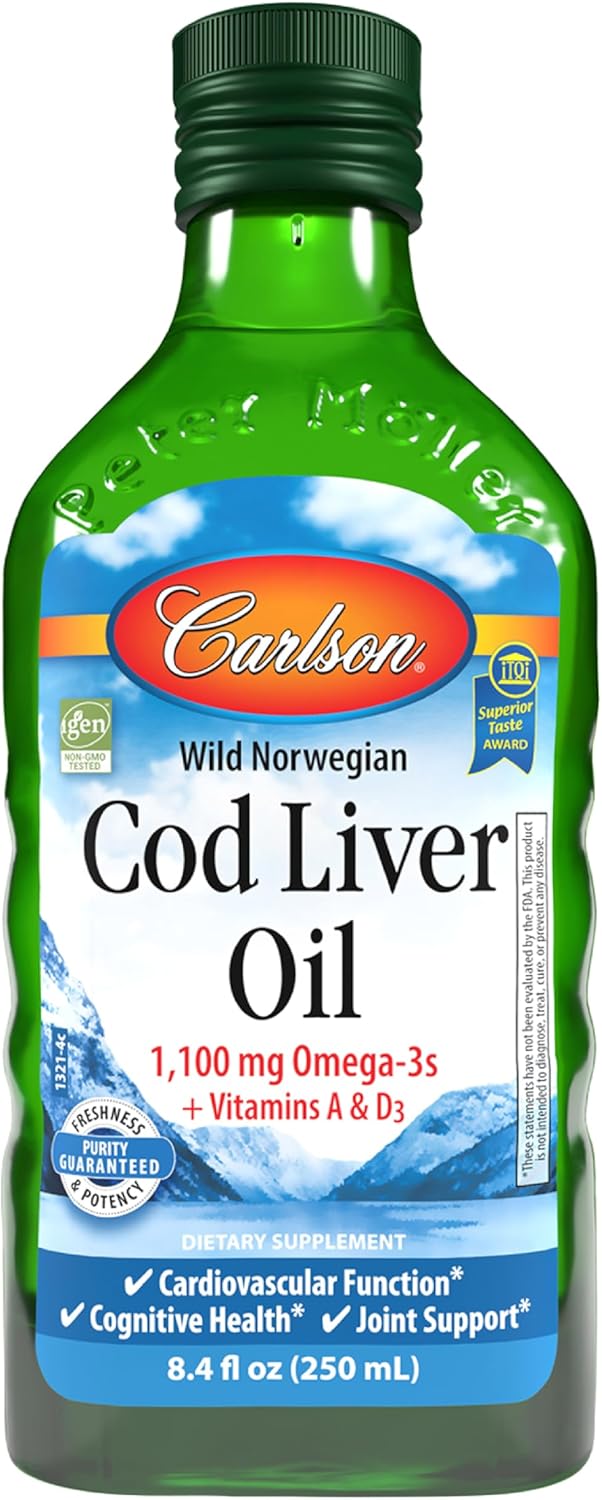
Carlson Wild Norwegian Cod Liver Oil 1100mg
Source
Wild-caught Norwegian Arctic cod
Processing
Cold-processed, naturally occurring vitamins
Omega-3 per softgel
~500mg EPA+DHA combined
Vitamin A / D per softgel
~1,500 IU A / ~400 IU D (natural)
Third-party tested
✓ Yes — oxidation, metals, PCBs
In production since
1965 (60+ years)
What to Look For When Choosing Any Cod Liver Oil
Whether you buy our top pick or evaluate another brand, these are the criteria that separate quality cod liver oil from products that aren't worth the money:
1. Wild-Caught Norwegian or Icelandic Cod
Arctic cod liver oil has been the gold standard for over a century. These waters are cold, relatively clean, and the cod are wild — not farmed. Farmed fish have different fatty acid profiles based on their feed. Look for "Norwegian" or "Icelandic" wild cod on the label. Pacific cod is also acceptable; avoid products that don't specify the source.
2. Naturally Occurring Vitamins A and D
This is the most important phrase to look for. It confirms the oil was cold-processed and the vitamins survived extraction intact. If the label says "contains vitamin A and D" without specifying "naturally occurring," they were likely added back synthetically after high-temperature processing. Reject these.
3. Third-Party Testing for Freshness
Omega-3 oils oxidize. A TOTOX (total oxidation) score below 26 is the international freshness standard. Reputable brands test every batch and provide certificates of analysis. If a brand's website doesn't mention third-party testing at all, that's a meaningful signal about quality control.
4. Antioxidant Preservation
Quality cod liver oil contains d-alpha tocopherol (natural vitamin E) as an antioxidant to prevent oxidation during storage. This should be listed in the "other ingredients." Avoid products that use no antioxidant preservation, or that use cheap synthetic dl-alpha tocopherol instead of the natural d-alpha form.
5. Reasonable Vitamin A Levels
Cold-processed cod liver oil naturally contains vitamin A in the range of 1,000–2,500 IU per dose. If a cod liver oil label shows 5,000+ IU of vitamin A per softgel, that's a synthetic add-back at manufacturer-set levels. At high doses, preformed vitamin A can become teratogenic and hepatotoxic over time. Naturally sourced, naturally limited is safer.
How to Take Cod Liver Oil for Best Results
Take cod liver oil with a meal containing some fat — omega-3s are fat-soluble and absorb better with dietary fat present. A daily dose of 1–2 softgels is sufficient for most adults as a maintenance supplement. If you're using it specifically to support vitamin D levels, understand that cod liver oil alone (at 400–800 IU D3 per 1–2 softgels) is unlikely to correct a meaningful deficiency without additional supplementation.
Once opened, store in the refrigerator. Exposure to heat and light accelerates oxidation significantly. A fresh, quality cod liver oil should have little to no fishy smell from the softgels — mild at most. If you open a bottle and the capsules smell strongly of fish or the oil tastes harsh and bitter, discard and replace.
Who Benefits Most From Cod Liver Oil
- People with limited sun exposure — office workers, northern latitudes, those who cover skin outdoors — get meaningful D3 support alongside omega-3s
- Anyone eating limited fatty fish — the American Heart Association recommends two servings of fatty fish per week; most people don't get close
- People supporting joint health — EPA and DHA have well-documented anti-inflammatory effects relevant to arthritis and joint recovery
- Those supporting cardiovascular health — omega-3s reduce triglycerides, support healthy blood pressure, and reduce platelet aggregation at therapeutic doses
- Individuals managing vitamin A intake from diet — if your diet is already high in liver, dairy, and fortified foods, review your total vitamin A before adding cod liver oil
The Bottom Line
Cod liver oil is a rare supplement that delivers genuine multi-nutrient value from a single natural source. The key is getting a cold-processed, wild-caught product with naturally occurring vitamins — not a refined oil with synthetic nutrients stirred back in.
Carlson Wild Norwegian Cod Liver Oil 1100mg meets every quality criterion and has done so consistently for 60 years. For most people looking to cover omega-3s, vitamin D, and vitamin A in a single daily supplement, this is the one.
See Carlson on Amazon →Frequently Asked Questions
Is cod liver oil safe to take every day?
Yes, for most healthy adults. At standard doses (1–2 softgels of a quality cod liver oil daily), the vitamin A levels are well within safe ranges and the omega-3 intake is beneficial. Do not combine high-dose cod liver oil with additional preformed vitamin A supplements. If you take blood thinners, consult your physician before starting any omega-3 supplement.
Can you take cod liver oil and vitamin D together?
Yes — in fact, for people with significant vitamin D deficiency, cod liver oil alone may not provide enough D3 to correct deficiency (a typical dose provides 400–800 IU). Adding a dedicated vitamin D3 supplement alongside cod liver oil is common and appropriate. Just account for the D3 in the cod liver oil when calculating your total daily intake.
Does cod liver oil help with inflammation?
The EPA and DHA in cod liver oil have well-documented anti-inflammatory effects. EPA in particular is metabolized into anti-inflammatory eicosanoids that compete with arachidonic acid pathways. Multiple clinical trials show omega-3 supplementation at 2–4g EPA+DHA daily reduces markers of systemic inflammation. At maintenance doses from cod liver oil, the effect is modest but cumulative over time.
This article contains affiliate links. iVitaLab may earn a commission on qualifying purchases at no additional cost to you. All recommendations are based on quality criteria — we only recommend products we would take ourselves.